How to Spot Quality Wooden Kitchenware

Table of Contents
- What Makes Wooden Kitchenware Worth Buying
- Choosing the Right Wood for Kitchen Utensils: Acacia, Teak, Olive Wood, Walnut, Maple, and More
- What to look for in Quality Wooden Kitchen Utensils
- Sourcing, Sustainability, and Certifications
- How to Care for Wooden Kitchenware So It Lasts for Years
- Bring Natural Character to Your Kitchen and Table
- Frequently Asked Questions
- Last Updated: August 14, 2026
What Makes Wooden Kitchenware Worth Buying
Wooden kitchenware brings something distinctive to everyday cooking and serving: the warmth, texture, and individual character of a natural material. No two pieces of wood are exactly alike, and a well-chosen wooden utensil can become one of those familiar kitchen tools you instinctively reach for.
But not all wooden kitchenware is made the same way. Wood species, grain, construction, finish, intended use, and proper care all influence how a piece feels, performs, and ages.
At ForestCraft by Amari, we appreciate kitchenware that balances natural character with everyday usefulness. This guide will help you understand what to look for when comparing wooden spoons, spatulas, serving pieces, bowls, cutting boards, and other tools for the kitchen and table.
Choosing the Right Wood for Kitchen Utensils: Acacia, Teak, Olive Wood, Walnut, Maple, and More
The right wood for a kitchen utensil depends on more than hardness alone. Grain, moisture resistance, construction, weight, and the way a piece will be used all contribute to how it performs and ages. For ForestCraft, there is another consideration as well: natural character. The grain, color, and subtle variations in wood are part of what make each piece distinctive.
There isn't one "best" wood for every kitchen task. Acacia offers excellent everyday versatility, teak is valued for its natural resilience, olive wood combines exceptional density with striking grain, walnut brings a rich and refined appearance, and engineered materials such as Pakkawood offer strength and distinctive design. Understanding these differences can help you choose kitchenware that fits the way you cook, serve, and gather around the table.
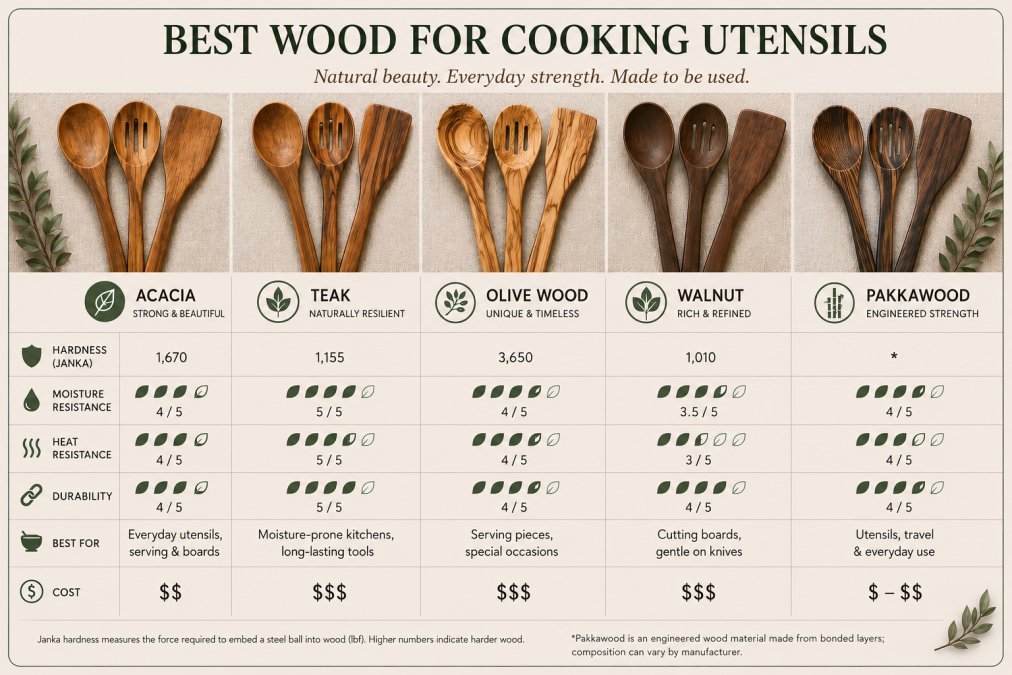
Acacia: Strong, Versatile, and Naturally Beautiful
Acacia is an excellent choice for everyday kitchenware. Its combination of hardness, durability, and attractive grain makes it well suited to cooking utensils, serving pieces, bowls, and cutting or preparation boards.
One of acacia's greatest appeals is its natural variation. Colors can range from warm honey and amber tones to deeper browns, often within the same piece. Rather than looking manufactured and uniform, acacia retains the character of the tree from which it came.
For a kitchen designed around natural materials, acacia offers an appealing balance of beauty, strength, and everyday practicality.
Teak: Naturally Resilient
Teak has long been valued for its natural oils and resistance to moisture. Those qualities also make it useful for kitchenware that regularly encounters water, food, and repeated washing.
Its warm golden-to-brown coloring and distinctive grain give teak a substantial, timeless appearance. With appropriate care, teak utensils and serving pieces can remain beautiful through years of regular use.
Its natural resilience makes teak particularly appealing for frequently used kitchen tools where both durability and appearance matter.
Olive Wood: Distinctive Grain and Exceptional Hardness
Olive wood immediately stands apart because of its dramatic grain. Cream, honey, and deeper brown streaks can flow through a single piece, giving each utensil or serving piece a naturally individual appearance.
It is also an exceptionally dense hardwood. That density makes olive wood durable and well suited to serving utensils, spoons, and other pieces where strength and beauty can be appreciated together.
Because every piece develops from the natural grain of the wood, olive wood is especially fitting for kitchenware intended to move naturally from preparation to presentation at the table.
Walnut: Rich, Warm, and Refined
Walnut brings deeper color to a collection of natural kitchenware. Its chocolate-brown tones and elegant grain make it particularly attractive for cutting boards, serving pieces, and utensils designed to remain visible on the counter or table.
Walnut is somewhat softer than woods such as hard maple and acacia, which can be an advantage for cutting surfaces because it is relatively gentle on knife edges.
Its combination of performance and rich appearance makes walnut especially appealing when the kitchen tool is also part of the presentation.
Pakkawood: Engineered for Strength and Character
Pakkawood takes a different approach. Rather than being carved from a single solid piece of hardwood, it is an engineered wood material made by bonding thin layers of wood or wood veneer under pressure. The result combines the warmth and appearance of wood with enhanced dimensional stability and the ability to create distinctive layered patterns.
Quality Pakkawood is commonly used for items such as utensil handles, cutlery, and cooking tools because it can provide a strong, smooth, durable surface.
For ForestCraft, Pakkawood complements traditional solid woods by offering another expression of what wooden kitchenware can be: functional, distinctive, and designed for everyday use.
Wood |
Relative Hardness |
Well Suited For |
Character |
|---|---|---|---|
Acacia |
High |
Utensils, bowls, serving pieces, boards |
Durable with warm, varied natural grain |
Teak |
Medium-high |
Cooking and serving utensils |
Naturally oily with good moisture resistance |
Olive Wood |
Very High |
Spoons, utensils, serving pieces |
Dense with dramatic, individual grain |
Walnut |
Medium-High |
Cutting boards and serving pieces |
Rich color and relatively knife-friendly |
Pakkawood |
Varies by construction |
Cooking utensils and specialty pieces |
Engineered, stable, and visually distinctive |
ForestCraft Perspective: Hardness is useful when comparing woods, but it doesn't tell the whole story. A great kitchen tool balances durability, comfortable handling, appropriate construction, natural beauty, and suitability for the job it was designed to do. The best choice is often not the hardest wood—it's the wood that best fits how you cook, serve, and gather.
Hardwood vs. Softwood: Why Wood Density Matters
For kitchen utensils, the name of the wood matters—but so do its density, grain structure, moisture resistance, and intended use.
Many kitchen tools are made from hardwoods because they offer a useful combination of strength and durability. Woods such as acacia, teak, olive wood, walnut, and maple have different characteristics, but each can be well suited to kitchenware when properly selected, shaped, finished, and cared for.
Softer woods may dent, absorb moisture, or show wear more readily, which is one reason they are less commonly chosen for frequently used cooking utensils and cutting surfaces. However, simply labeling a wood "hardwood" or "softwood" doesn't tell the whole story. Individual species vary considerably in density, grain, hardness, and moisture resistance.
One way to compare wood hardness is the Janka hardness test, which measures the force required to embed a steel ball into wood. Janka ratings can be useful when comparing species, but a higher number does not automatically mean a wood will make a better kitchen utensil. Durability, grain, moisture resistance, construction, weight, feel, and intended use all matter.
When shopping for wooden kitchenware, look for products that clearly identify the wood or material used. Knowing whether you're purchasing acacia, teak, olive wood, walnut, Pakkawood, or another material tells you far more about the piece than a generic description of "wood."
Grain Orientation and Structural Integrity
The beauty of natural wood comes largely from its grain, but grain also influences how wooden kitchenware performs.
For spoons, spatulas, and serving utensils, look for smooth, well-finished wood with no visible cracks, splits, rough areas, or weak points. The grain should complement the shape and construction of the utensil rather than creating obvious areas where the piece could split under normal use.
For wooden cutting and preparation boards, you'll often encounter three construction styles: face grain, edge grain, and end grain.
Face grain displays the broad surface of the wood and often showcases its natural grain particularly well. It can make an attractive serving or preparation surface, although repeated cutting will generally leave marks more readily than on end-grain construction.
Edge grain boards are constructed with the edges of wood strips facing upward. They provide a good balance of durability, appearance, and everyday practicality and are widely used for cutting and preparation boards.
End grain boards expose the ends of the wood fibers at the cutting surface. A knife can move between these fibers rather than continually cutting directly across them, which can make cutting marks less pronounced and provide a knife-friendly working surface. End-grain boards generally require more complex construction and regular care.
No single grain orientation is best for every purpose. The better question is whether the wood, construction, and design are appropriate for the way the piece will be used.
ForestCraft Perspective: Natural variation isn't a flaw in wooden kitchenware—it's part of its character. Grain, color, and pattern will vary from piece to piece, making each wooden tool a little different from the next. What matters most is choosing a well-made piece suited to its purpose and caring for it properly over time.
What to Look for in Quality Wooden Kitchen Utensils
Beautiful grain may be what first catches your eye, but quality wooden kitchenware is about more than appearance. How a piece feels in your hand, the smoothness of its finish, the integrity of the wood, and the quality of its construction all help determine how well it will perform over time.
Start with the surface of the wood. Run your fingers over the utensil and look closely at the edges, handle, and working surface. A well-finished piece should feel smooth and comfortable, without splinters, pronounced rough patches, obvious tool marks, or excessively raised grain. Small variations are natural—this is real wood—but significant roughness can make a utensil harder to clean and may indicate inadequate finishing.
Next, look for cracks or splits. Pay particular attention to areas where the utensil becomes thinner, such as the transition between the handle and spoon bowl or spatula head. Wood naturally responds to changes in moisture, but a new utensil should not begin its life with structural cracks that may become larger through repeated washing, drying, and use.
Consider weight, thickness, and balance as well. A good wooden utensil should feel comfortable and secure in your hand. Heavier isn't automatically better, nor is thinner automatically inferior. The goal is a thoughtful balance between strength, maneuverability, and comfort for the utensil's intended purpose.
For cutting boards, laminated pieces, and other multi-piece construction, examine the joints and seams. They should appear clean, tight, and consistent, without obvious gaps or separation. Products intended for food preparation should also be manufactured using materials and adhesives appropriate for their intended food-contact use.
Finally, remember that natural variation is part of the appeal. Differences in grain, knots, streaks, and color don't necessarily indicate poor quality. In woods such as acacia and olive wood, those variations are often what make an individual piece especially beautiful.
ForestCraft Perspective: Quality wooden kitchenware shouldn't merely look beautiful when it's new. It should feel good in your hand, perform the task it was designed for, and develop character as it becomes part of the everyday rhythm of your kitchen and table.
Food-Safe Finishes and Materials: What to Look For
The finish on wooden kitchenware serves an important purpose. In addition to enhancing the natural beauty of the grain, an appropriate finish can help protect the wood from moisture, staining, and the wear that comes with everyday use.
Wooden kitchen products can be finished in several different ways. Depending on the product and its intended use, manufacturers may use penetrating oils and waxes, protective food-safe coatings, or specially formulated varnishes and finishes. The important question isn't simply what type of finish was used, but whether that particular finish is appropriate for its intended food-contact application.
Mineral oil and beeswax are familiar examples of finishes and conditioners commonly used on wooden cutting boards and kitchenware. Other wooden products may use a cured protective finish designed to create a more durable surface and reduce moisture penetration. Neither approach is automatically better—the appropriate finish depends on the wood, construction, and intended use of the piece.
When evaluating wooden kitchenware, look for products intended for culinary or food-contact use and follow the manufacturer's care instructions. This is particularly important because different finishes may require different maintenance. An oil-finished cutting board, for example, may benefit from periodic conditioning, while a utensil with a durable protective finish may have different care requirements.
What About Varnishes and Protective Coatings?
The word "varnish" does not by itself mean that a wooden kitchen product is unsafe. Protective finishes vary considerably in their formulation and intended applications. Some are specifically manufactured for surfaces or products that may come into contact with food when properly applied and fully cured.
Rather than judging a wooden utensil solely by whether it has a coating, consider the condition and intended use of the finished surface.
A smooth, intact finish can help protect the underlying wood. However, any wooden kitchen product that develops significant peeling, flaking, deep cracking, or other deterioration should be inspected and, when appropriate, removed from food preparation use or replaced according to the manufacturer's recommendations.
Natural Color and Variation
Color variation is also not necessarily evidence that a wooden product has been artificially stained. Woods such as acacia, olive wood, teak, and walnut naturally display substantial differences in color and grain—even within the same piece.
Some engineered woods, including Pakkawood, may also be intentionally produced with distinctive colors and layered patterns as part of their design.
These variations are part of what makes wooden kitchenware unique. Two utensils made from the same type of wood may never look exactly alike.
Materials Beyond the Wood
Many quality kitchen tools combine wood with other materials, including stainless steel, silicone, adhesives, or engineered components. These materials aren't inherently undesirable simply because they aren't natural wood. What matters is that the materials are appropriate for the product's intended use and that the piece is well constructed.
For laminated or engineered wooden products, clean and secure joints are a good indication of construction quality. Visible separation, cracking, or failing joints are reasons to discontinue use and consult the manufacturer's care recommendations.
ForestCraft Perspective: A finish shouldn't hide the character of wood—it should help preserve it. Whether a piece is conditioned with oil, protected with an appropriate food-safe finish, or created from an engineered wood such as Pakkawood, the goal is the same: to balance natural beauty with the durability needed for everyday life in the kitchen and around the table.
Sourcing, Sustainability, and Certifications
Sustainability is an important consideration when choosing natural materials, but it is also a term that can mean different things depending on the product, material, and supply chain.
Wood species, forest management, manufacturing methods, transportation, product lifespan, and even how long a kitchen tool remains in use can all contribute to its overall environmental impact. For that reason, broad terms such as "natural," "renewable," or "sustainable" shouldn't be treated as interchangeable.
Third-party certification can provide additional information about how wood is sourced. One widely recognized example is Forest Stewardship Council (FSC) certification, which establishes standards related to responsible forest management and chain-of-custody practices. Certification applies to specific materials, products, and supply chains, however, and should not be assumed unless it is specifically identified for the product being considered.
Bamboo provides another useful example of why material alone doesn't tell the whole sustainability story. Bamboo grows rapidly and is renewable, but finished bamboo products can differ considerably in their construction, processing, adhesives, finishes, transportation, and useful lifespan.
The same principle applies to hardwoods. Acacia, teak, olive wood, walnut, maple, and other species come from different regions and supply chains, so environmental claims should be considered in the context of the individual product rather than the wood name alone.
For shoppers who place a high priority on sourcing, look for specific information provided by the manufacturer or seller and distinguish documented certifications from broader environmental marketing language.
ForestCraft Perspective: Natural materials connect the kitchen to something more enduring than disposable design. We believe the most meaningful approach is to appreciate the material, choose thoughtfully, care for it properly, and keep useful pieces in service for as long as they continue to perform well.
How to Care for Wooden Kitchenware So It Lasts for Years
Quality wooden kitchenware can remain beautiful and useful for many years when cared for properly. The most important thing to remember is that different woods and finishes may require different care. An oil-finished cutting board, a wooden serving bowl with a protective finish, and a Pakkawood cooking utensil should not automatically be treated the same way.
Always begin with the care instructions provided for the individual product. Beyond that, a few simple habits can help protect most wooden kitchenware from unnecessary wear.
Cleaning Wooden Kitchenware
Unless the manufacturer specifically states otherwise, hand washing is the safest choice for wooden kitchenware.
Wash wooden utensils, bowls, boards, and serving pieces with warm water, mild dish soap, and a soft sponge or cloth. Avoid prolonged soaking, and dry the piece promptly after washing.
Dishwashers expose kitchenware to prolonged moisture, high temperatures, and strong detergents. Over time, those conditions can contribute to fading, drying, warping, cracking, separation, or deterioration of some wooden products and finishes.
After washing, wipe away excess moisture and allow the piece to finish air-drying completely before storing it.
For cutting boards and food-preparation surfaces, follow the manufacturer's cleaning recommendations, particularly after contact with raw meat, poultry, seafood, or other foods that require careful handling.
Conditioning Oil-Finished and Unfinished Wood
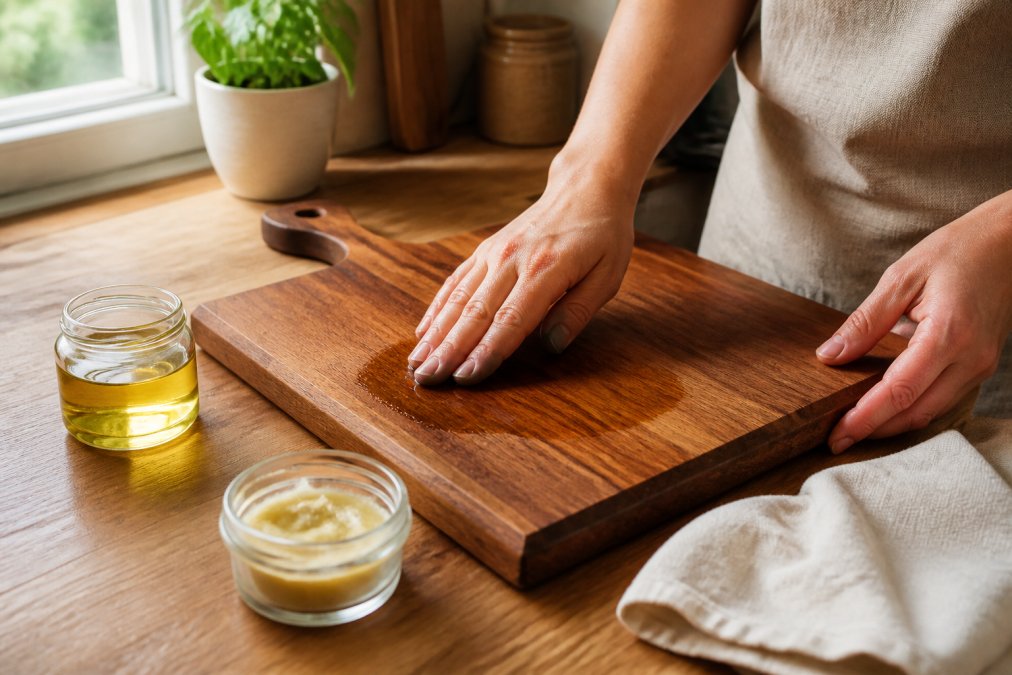
Some wooden kitchenware—particularly unfinished or oil-finished cutting boards and utensils—benefits from periodic conditioning.
Food-grade mineral oil is commonly used for this purpose because it penetrates the wood without becoming rancid. A conditioner formulated specifically for wooden cutting boards or kitchenware may also combine food-grade mineral oil with beeswax or similar ingredients.
How often a piece needs conditioning depends on the wood, its finish, how frequently it is used, and how often it is washed. Rather than following a rigid schedule, look for signs that an oil-finished piece is becoming noticeably dry or dull and follow the manufacturer's recommendations.
Not Every Wooden Product Needs to Be Oiled
This distinction is important.
Wooden kitchenware with a cured protective finish or coating may not require regular oiling at all. Applying mineral oil, wax, or another treatment to such a product may provide little benefit and could affect the appearance or performance of the existing finish.
The same principle applies to engineered wood products such as Pakkawood. Their construction and finish may require different care than a traditional unfinished hardwood cutting board.
When a product has a protective finish, the best approach is usually simple: clean it gently, avoid prolonged soaking and excessive heat, dry it thoroughly, and follow the care instructions supplied with the product.
What About Olive Oil and Other Cooking Oils?
For unfinished or oil-finished wooden kitchenware that requires conditioning, use a product specifically intended for that purpose rather than assuming that an everyday cooking oil is suitable.
Some food oils can oxidize or develop undesirable odors over time. A food-grade mineral oil or wood conditioner specifically formulated for cutting boards and wooden kitchenware is generally a more predictable choice when conditioning is recommended.
Caring for Older Wooden Kitchenware
Normal changes in color and surface appearance are part of the way natural wood ages. Minor wear doesn't necessarily mean a favorite wooden utensil has reached the end of its useful life.
Before sanding, refinishing, or applying oil to an older piece, however, consider how it was originally finished. Sanding a utensil or serving piece with a protective finish can remove that finish and change how the product needs to be maintained afterward.
Deep cracks, splintering, separating joints, peeling finishes, or other significant structural deterioration are better reasons to retire a piece than ordinary changes in color or patina.
ForestCraft Perspective: Good care isn't about constantly treating wood—it's about understanding it. Wash it gently, don't leave it soaking, allow it to dry thoroughly, and maintain the finish in the way it was designed to be maintained. With thoughtful care, wooden kitchenware can develop character rather than simply showing wear.
When to Replace Wooden Utensils: Signs of Wear to Watch For
One of the appealing qualities of wooden kitchenware is the way it develops character with use. Changes in color, a deepening patina, and minor surface marks are often a normal part of living with natural wood. They don't necessarily mean a piece needs to be replaced.
There are, however, some signs of wear that deserve closer attention.
Deep cracks or splits are among the clearest reasons to retire a wooden utensil, bowl, or cutting board. Significant openings can trap moisture and food residue and become increasingly difficult to clean. Cracks can also weaken the structure of the piece and continue to expand through repeated use and washing.
Splintering or severely rough surfaces are another concern, particularly on areas that contact food or your hands. Minor surface changes may sometimes be addressed according to the manufacturer's care recommendations, but extensive splintering or deterioration generally means the piece has reached the end of its practical life.
Warping and structural changes matter as well. A cutting board that no longer sits securely on the counter can become unstable during use. Handles, joints, or laminated sections that have begun to separate should also be taken seriously.
Persistent odors or unusual discoloration deserve attention, but not every change in appearance is a problem. Foods such as berries, tomatoes, spices, and beets can naturally stain wood, while many species deepen in color as they age. However, an unexplained musty odor, visible mold, or discoloration accompanied by deterioration may indicate that it's time to replace the piece.
For wooden kitchenware with a protective finish, watch the condition of that finish as well. Significant peeling, flaking, or deterioration should be addressed according to the manufacturer's recommendations. Avoid automatically sanding or refinishing a coated piece, since doing so can remove the original protective finish and change how the product performs.
There is no universal expiration date for wooden kitchenware. How long a piece lasts depends on the wood or engineered material, its construction and finish, how frequently it is used, and how it is cleaned and stored. Well-made wooden kitchenware that is used and cared for appropriately can remain part of the kitchen for many years.
ForestCraft Perspective: Age alone doesn't determine when a wooden kitchen tool should be replaced. Natural wood is meant to develop character. A changing patina tells the story of use; deep cracks, splintering, separation, or structural deterioration tell you when it's time for something new.
Bring Natural Character to Your Kitchen and Table
Choosing wooden kitchenware isn't simply about finding the hardest wood or the utensil with the most polished appearance. It's about understanding the material, choosing a piece suited to its purpose, and caring for it in a way that respects how it was made.
Natural wood brings warmth, texture, and individuality into everyday cooking and serving. Grain patterns vary. Colors deepen. Familiar pieces develop character through use. These aren't necessarily imperfections—they're part of what makes natural materials different from mass-produced alternatives.
That's the idea behind ForestCraft by Amari: thoughtfully selected kitchenware that celebrates the character of wood while remaining practical for the everyday rhythms of preparing, serving, and gathering.
Bring natural warmth back to your kitchen and table. Explore the ForestCraft collection and find pieces made to become part of the way you cook, serve, and gather.
Frequently Asked Questions
What should I look for when buying wooden cooking utensils?
Start with the material and construction. Look for a clearly identified wood or engineered wood, a smooth and comfortable surface, solid construction, and no significant cracks, splinters, gaps, or separating joints. The finish matters too, but don't assume that a coated utensil is inferior to an oil-finished one. Wooden kitchenware may be protected with oils, waxes, or durable food-safe finishes depending on the product and its intended use. What matters is that the materials and finish are appropriate for kitchen use. Finally, consider how the utensil feels in your hand. Good kitchen tools should balance durability with comfortable weight, shape, and control.
What woods are good for cooking utensils?
There isn't one wood that's best for every kitchen tool. Different species bring different strengths. Acacia offers an excellent combination of durability, distinctive grain, and everyday versatility. Teak is valued for its natural oils and moisture resistance. Olive wood is exceptionally dense and known for its dramatic, individual grain patterns. Walnut offers rich color and a refined appearance while remaining relatively gentle on knife edges when used for cutting surfaces. Engineered woods such as Pakkawood offer another option, combining the warmth and appearance of wood with layered construction designed for strength and dimensional stability. The better question isn't simply "Which wood is hardest?" but "Which material is best suited to the job this kitchen tool needs to perform?"
When should you throw out wooden utensils?
Replace a wooden utensil when it develops deep cracks or splits, significant splintering, separating joints, visible mold, persistent musty odors, or substantial deterioration of the surface or finish. Minor changes in color, small surface marks, and a deepening patina are often normal signs of use and don't necessarily mean a piece needs to be discarded. Avoid automatically sanding, oiling, or refinishing a damaged utensil, particularly if it has a protective finish. Instead, follow the manufacturer's care recommendations. There is no universal lifespan for wooden kitchenware—a well-made piece that is properly used and cared for can remain useful and beautiful for many years.
Is olive wood better than bamboo for kitchenware?
Neither material is automatically better—the right choice depends on the product, its construction, and how you plan to use it. Olive wood is a dense hardwood prized for its strength and distinctive grain patterns. Its dramatic variations in color and grain make it particularly appealing for spoons, serving utensils, and pieces that move naturally from kitchen preparation to presentation at the table. Bamboo is a fast-growing natural material valued for its light weight and versatility. Because many bamboo kitchen products are constructed from multiple pieces or layers, quality can vary depending on how they are manufactured and finished. Engineered materials such as Pakkawood take a different approach, using bonded layers to create durable, dimensionally stable kitchen tools with distinctive patterns and finishes. Rather than choosing based on material alone, consider the construction, finish, intended use, and care requirements of the individual product. Olive wood, bamboo, and engineered wood can each have a place in a thoughtfully equipped kitchen.
This article was written using GrandRanker