Is Red Light Therapy Actually Effective?

Table of Contents
- What Red Light Therapy Actually Does at the Cellular Level
- What the Scientific Evidence Says About Red Light Therapy
- How Long Does Red Light Therapy Take to Work
- Home Devices vs. Clinical Settings: What Changes
- Red Light Therapy Side Effects and Contraindications
- Best Practices for Red Light Therapy at Home
- Conclusion
Last Updated: August 20, 2026
Red light therapy has moved from clinical settings into the mainstream wellness conversation, bringing with it plenty of enthusiasm—and plenty of conflicting claims. Some potential uses are supported by a growing body of research, while evidence for others remains limited or still developing. This guide from Amari looks at what red light therapy is, how photobiomodulation works, what current research suggests, and what consumers should consider when evaluating red light therapy for at-home use.
What Red Light Therapy Actually Does at the Cellular Level
Red light therapy uses specific wavelengths of visible red and near-infrared light in a process commonly known as photobiomodulation (PBM). Unlike ultraviolet light, these wavelengths are non-ionizing and are studied for their ability to interact with light-sensitive molecules in cells and influence cellular processes. The biological response depends on several factors, including wavelength, irradiance, exposure time, treatment area, and the amount of light that actually reaches the targeted tissue.
Photobiomodulation and Mitochondrial Response
One of the most widely studied explanations for photobiomodulation involves the mitochondria, the structures within cells responsible for producing much of the body's usable cellular energy. Research suggests that red and near-infrared light can influence mitochondrial activity through mechanisms involving cytochrome c oxidase, an enzyme in the mitochondrial respiratory chain. These interactions may affect the production of adenosine triphosphate (ATP), cellular signaling, nitric oxide, and reactive oxygen species. Researchers continue to investigate these and other mechanisms to better understand how photobiomodulation produces its biological effects.
Photobiomodulation may also influence cellular signaling involving reactive oxygen species and nitric oxide. These molecules are not simply harmful byproducts; in appropriate amounts, they participate in normal cellular communication and regulation. This helps explain why researchers increasingly emphasize proper light dosage rather than assuming that more exposure will necessarily produce a greater effect.
Wavelengths That Matter: The Therapeutic Window
Not all wavelengths of light interact with tissue in the same way. Photobiomodulation research commonly focuses on red and near-infrared wavelengths, often within the broader range of approximately 600 to 1000 nanometers (nm). Different wavelengths penetrate tissue to different depths, which is one reason researchers study different wavelength ranges for different applications.
- Red light (630-700 nm): Red wavelengths are absorbed more superficially and are commonly studied for applications involving the skin, including photoaging and other dermatologic uses.
- Near-infrared light (800-1000 nm): Near-infrared wavelengths generally penetrate more deeply than visible red light and have been studied for applications involving deeper tissues, including muscles and joints.
Wavelength is only part of the equation. Irradiance describes the amount of optical power delivered over a given area, commonly expressed in milliwatts per square centimeter (mW/cm²), while fluence describes the total light energy delivered over that area during a treatment session, commonly expressed in joules per square centimeter (J/cm²). Treatment time, distance from the light source, and the characteristics of the targeted tissue can also influence the dose that reaches the tissue.
Importantly, photobiomodulation does not necessarily follow a “more is better” rule. Research has described a biphasic dose response, in which too little light may produce little or no effect while increasing the dose beyond an effective range may reduce the desired biological response. This makes following device-specific instructions and appropriate treatment protocols more important than simply choosing the brightest or highest-powered device.
What the Scientific Evidence Says About Red Light Therapy
The evidence for red light therapy varies considerably depending on the condition being studied, the wavelengths and doses used, and the quality of the research. Randomized controlled trials and systematic reviews have reported promising findings for several applications, but results from one treatment protocol or condition should not automatically be applied to another. When evaluating whether red light therapy is effective, the better question is often: effective for what, using which wavelength and dose, and under what treatment protocol?
Skin Rejuvenation and Collagen Density
Skin rejuvenation is one of the better-known applications of red light photobiomodulation. Clinical studies have investigated whether repeated exposure to specific red and near-infrared wavelengths can influence fibroblast activity, collagen production, skin texture, and visible signs of photoaging. Some controlled studies have reported improvements in measures such as skin complexion, roughness, collagen density, and fine lines, although treatment parameters and study designs vary.
A review published in Seminars in Cutaneous Medicine and Surgery describes evidence supporting low-level light therapy for several dermatologic applications, including skin rejuvenation. The review discusses proposed effects on collagen production, inflammation, and tissue repair while also noting that outcomes depend on treatment parameters. As with photobiomodulation more broadly, results from a particular wavelength and dose should not automatically be generalized to every red light device.
Inflammation, Tissue Repair, and Wound Healing
Red and near-infrared photobiomodulation have been studied for potential effects on inflammation, pain, tissue repair, and wound healing. Proposed mechanisms include changes in cellular signaling, circulation, and inflammatory pathways. Clinical studies have reported encouraging findings in some applications, but results vary considerably according to the condition being treated and the wavelength, dose, treatment protocol, and quality of the available evidence.
Wound healing illustrates both the potential and the limitations of the current evidence. Systematic reviews have found encouraging results in some types of wounds, while also identifying substantial differences among studies in wavelength, energy dose, number of treatments, and application method. These differences make it difficult to translate the research into a single treatment schedule or to assume that every red or near-infrared device will produce the same result.
Hair Follicle Stimulation and Scalp Health
Photobiomodulation has also been studied for certain types of hair loss, particularly androgenetic alopecia, commonly known as pattern hair loss. Clinical trials using low-level red or near-infrared light have reported increases in hair density compared with placebo or sham treatment in some study populations. A 2024 systematic review and meta-analysis found a significant improvement in hair density among participants with androgenetic alopecia, while noting that additional research is needed to better establish effectiveness for other forms of hair loss.
Hair-growth studies generally evaluate repeated treatment over weeks or months rather than a few isolated sessions. This is another reason consumers should be cautious about products promising rapid hair regrowth from occasional use. Results observed in studies of androgenetic alopecia also should not be assumed to apply to hair loss caused by other medical conditions.
How Long Does Red Light Therapy Take to Work
There is no single timeline for when red light therapy should “work.” Clinical studies use different wavelengths, doses, treatment schedules, and outcome measures depending on the condition being investigated. Some studies evaluate changes after several weeks of treatment, while others continue for several months. The time needed to observe a measurable effect therefore depends on what is being treated, how the light is delivered, and which outcome is being measured.
A better way to interpret treatment timelines is to compare your device and intended use with the protocol used in relevant clinical research. For example, studies of pattern hair loss generally involve repeated treatment over months, while skin studies may assess changes after several weeks of scheduled sessions. Those study timelines describe the protocols researchers tested; they should not be interpreted as guaranteed timelines for an individual user or automatically applied to a different device.
Consistency matters when following a treatment protocol, but consistency alone cannot compensate for an inappropriate wavelength, dose, or device. The most useful approach is to follow the manufacturer's instructions for the specific device rather than increasing session length or frequency in an attempt to accelerate results. If a device is being used as part of treatment for a medical condition, its use should be discussed with an appropriate healthcare professional.
Home Devices vs. Clinical Settings: What Changes
Home and professional photobiomodulation devices can differ in wavelength, irradiance, treatment area, design, and intended use. Professional systems may provide different output levels or treatment configurations and are often used under supervision, while home devices are designed around convenience and repeated self-use. These differences mean treatment times and schedules cannot reliably be converted from one device to another without considering the specifications of each system.
Explore the VivaRay Therapy Belt →
The practical advantage of a home device is accessibility. Having a device available at home may make it easier to follow the recommended treatment schedule without repeated appointments. That convenience can be valuable because many photobiomodulation studies involve a series of treatments rather than a single exposure. It does not, however, mean that a home device is equivalent to every professional system or appropriate for every application.
Red Light Therapy Side Effects and Contraindications
Photobiomodulation is generally considered well tolerated when appropriate light parameters and treatment protocols are used. Reported adverse effects in clinical studies are typically mild and temporary, but safety depends on factors such as wavelength, dose, treatment location, device design, and individual circumstances. Following the safety instructions provided for the specific device is therefore important.
Some situations call for additional caution. People who take medications or supplements known to increase photosensitivity, have a light-sensitive medical condition, are pregnant, have an active or suspected tumor in the intended treatment area, or have another condition that could affect the safe use of a light-based device should review the manufacturer's warnings and consult an appropriate healthcare professional before treatment. Precautions can vary with the type of device and where it is being used.
Eye safety depends on the device, wavelength, intensity, and intended treatment area. Do not stare directly into a light source unless the device is specifically designed for ocular treatment, and follow the manufacturer's instructions regarding eye protection. Extra caution is appropriate when using light-emitting devices near the eyes or when a person has an existing eye condition or increased photosensitivity.
Skincare Products and Photosensitivity
Skincare products can complicate red light therapy because some ingredients may irritate the skin or increase sensitivity to light. Rather than assuming that every retinoid, exfoliant, or active ingredient is incompatible with red light, check the instructions for both the skincare product and the light therapy device. People using prescription topical medications should ask their prescribing healthcare professional about combining them with light-based treatments.
Pay particular attention to products labeled as photosensitizing or those that already cause redness, peeling, dryness, or irritation. Introducing red light therapy while the skin is irritated can make it difficult to determine what is causing a reaction. When in doubt, simplify the skincare routine around a new light-therapy regimen and introduce changes gradually rather than combining several new treatments at once.
Best Practices for Red Light Therapy at Home
Using red light therapy at home starts with understanding the specific device rather than applying a universal treatment formula. Wavelength, irradiance, treatment time, treatment area, distance from the light source, and frequency can all influence the dose delivered. Because these parameters vary among devices, the manufacturer's instructions should be the starting point for safe and appropriate use.
When evaluating and using a home red light therapy device, consider the following:
- Device specifications: Look for clearly stated wavelengths and, when available, irradiance or other output information that helps explain how the device delivers light.
- Treatment instructions: Follow the manufacturer's recommended session duration, treatment distance or skin-contact instructions, and frequency rather than assuming that longer or more frequent sessions are better.
- Treatment area: Use the device only on areas for which it is designed. Panels, masks, handheld devices, and wearable wraps can deliver light differently and may have different instructions.
- Skin preparation: Follow the device manufacturer's guidance regarding lotions, cosmetics, skincare products, and whether the treatment area should be clean and dry before use.
- Safety precautions: Review warnings and contraindications before beginning treatment, including instructions concerning eye protection, photosensitivity, medications, and when professional medical guidance may be appropriate.
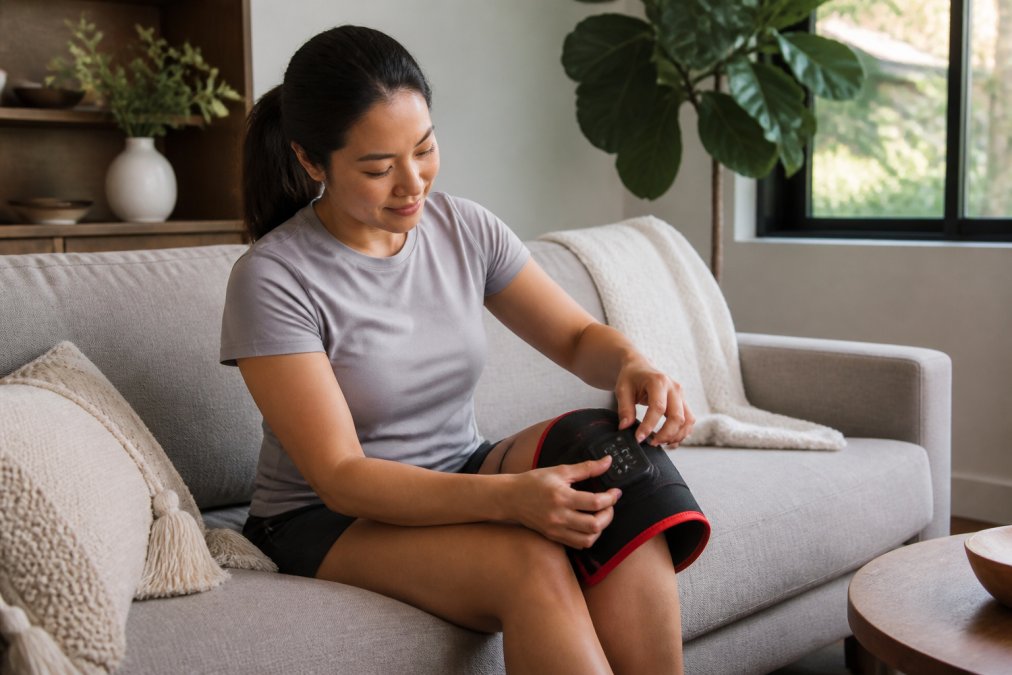
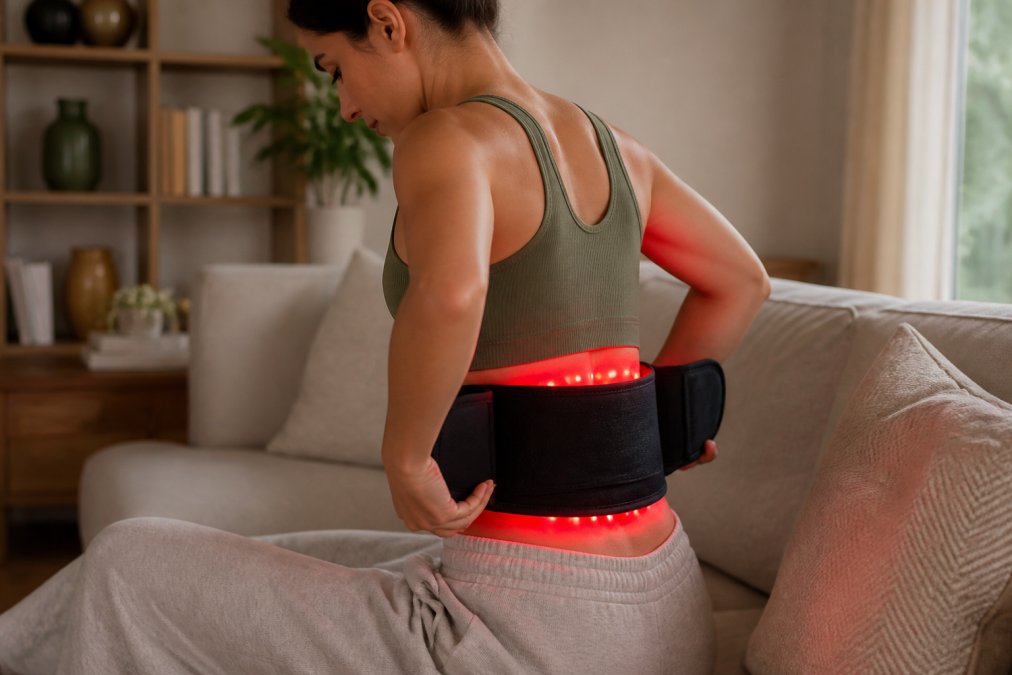
Wearable red light therapy devices offer a different approach from freestanding panels by positioning the light source directly around a targeted body area. This format can make treatment more convenient for areas such as the lower back, hips, or knees while allowing the user to move or relax during a session. Amari's VivaRay collection includes wearable formats such as the Therapy Belt and ThermaKnee Relief Wrap for consumers who prefer targeted, at-home application.
What About Long-Term Use?
Long-term use is another area where there is no single protocol that applies to every photobiomodulation device or treatment goal. Clinical studies vary in duration, and many are designed to evaluate a specific treatment period rather than determine an ideal lifelong maintenance schedule. Recommendations for continued use should therefore be based on the device, intended application, available evidence, and manufacturer's instructions.
Some applications may require continued treatment to maintain an observed effect, but the appropriate schedule can differ substantially. For example, research involving pattern hair loss commonly evaluates repeated treatments over extended periods, while studies of skin or musculoskeletal applications may use very different schedules. Evidence from one application should not be used to create a maintenance schedule for another.
For home users, convenience can make it easier to follow whatever schedule is appropriate for their particular device. The goal, however, should be consistent use according to an appropriate protocol—not simply using red light therapy as often as possible.
Conclusion
So, is red light therapy actually effective? The research suggests that photobiomodulation can produce measurable biological effects and has shown promising or beneficial results for certain applications, including some uses involving skin, tissue repair, and pattern hair loss. But “red light therapy” is not a single standardized treatment. Outcomes depend on the condition being studied, wavelength, dose, treatment schedule, device characteristics, and individual response. For consumers considering an at-home device, the best approach is to look beyond broad marketing claims, review the device's specifications and intended use, follow its instructions, and keep expectations grounded in the evidence available for that particular application.
Frequently Asked Questions
Is red light therapy real or just a wellness trend?
Red light therapy is based on a real and actively studied biological process known as photobiomodulation. Peer-reviewed research has reported measurable effects in several applications, including certain dermatologic uses, tissue-repair applications, and androgenetic alopecia. However, the strength of the evidence varies by application, and results depend on factors such as wavelength, dose, treatment protocol, and device design. Red light therapy is therefore more than a wellness trend, but that does not mean every claim made for every red light device is supported by clinical evidence.
What are the known side effects of red light therapy?
Photobiomodulation is generally considered well tolerated when appropriate treatment parameters are used, and adverse effects reported in clinical studies are typically mild and temporary. Safety can vary with the wavelength, dose, treatment area, device, and individual circumstances. Users should follow the manufacturer's safety instructions, particularly regarding eye protection and treatment duration, and people with photosensitivity or other relevant medical considerations should seek appropriate professional guidance before use.
How long does red light therapy take to work for skin or pain?
There is no universal timeline for red light therapy. Studies involving skin, pain, tissue repair, and other applications use different wavelengths, doses, treatment schedules, and measures of success. Some research evaluates outcomes after several weeks, while other studies continue for months. Rather than relying on a general timeline, follow the instructions for the specific device and consider the evidence for the particular application being treated.
Does the FDA regulate red light therapy devices?
Yes. In the United States, light-based devices marketed for medical purposes may be regulated by the U.S. Food and Drug Administration according to their intended use and device classification. Some devices may require FDA clearance through the 510(k) process before being marketed for particular medical indications. FDA clearance should not be confused with a general endorsement of red light therapy or assumed to apply to every red light product. Consumers should evaluate the regulatory status and intended use of the specific device rather than assuming that all red light therapy devices have the same FDA status.