Long-Lasting Kitchenware: How to Choose Home Goods Made to Last

Table of Contents
- What Makes Kitchenware Worth Keeping?
- Materials That Belong in a Well-Used Kitchen
- ForestCraft Pieces for the Kitchen and Table
- How to Care for Kitchenware for the Long Term
- Choosing More Thoughtfully
- Which Material Is Right for Your Kitchen?
- A Kitchen Made for Everyday Moments
- Frequently Asked Questions
Last Updated: August 15, 2026
The kitchen is filled with things we reach for every day—the bowl used for family salads, the spoon beside the stove, the serving pieces brought out when friends gather around the table. Choosing well-made kitchenware means looking beyond how something appears when it's new and considering the materials, craftsmanship, care, and everyday usefulness that can help it serve your home for years to come. In this guide, we'll look at what makes kitchenware durable, which materials are especially well suited to everyday use, and how thoughtful care can help you get more from the pieces you choose.
What Makes Kitchenware Worth Keeping?
Kitchenware worth keeping begins with materials and construction suited to the way the piece will actually be used. In the kitchen, that can mean repeated washing, exposure to moisture, contact with food, changes in temperature, and the simple wear that comes from being reached for day after day.
Quality doesn't mean a piece will always look exactly as it did on the first day. Natural wood, in particular, develops character with use. Grain, color, and subtle signs of everyday life are part of what make natural materials feel at home in a well-used kitchen.
Look Beyond the Finish
A beautiful finish may catch your eye, but the material beneath it matters just as much. When choosing kitchenware, look for products that clearly identify what they're made from and consider whether that material is appropriate for its intended use.
Solid hardwoods, quality laminated woods, and food-grade stainless steel each bring different strengths to the kitchen. Rather than looking for a single “best” material, consider how the piece will be used, how much care it requires, and whether those characteristics fit the way you cook and gather.
What to Look for Before You Buy
When shopping for wooden kitchenware, start with the product description. Look for a specific wood species rather than broad descriptions such as “natural wood.” Teak, acacia, olive wood, walnut, and other hardwoods each have their own appearance and characteristics. Knowing the material helps you understand both what to expect and how to care for it.
For stainless-steel kitchenware, look for clearly identified food-grade materials and care instructions. And regardless of material, pay attention to construction, intended use, maintenance requirements, and whether the seller provides enough information to help you care for the product properly.

Materials That Belong in a Well-Used Kitchen
The material a piece is made from plays an important role in how it looks, feels, performs, and should be cared for. Understanding those differences makes it easier to choose kitchenware that fits both your home and the way you use it.
Teak and Acacia: Natural Warmth for Everyday Use
Teak is valued for its natural oils, warm grain, and ability to handle the demands of everyday use when properly cared for. Those qualities have made it a popular choice for bowls, utensils, and serving pieces that move naturally between food preparation and the table.
Acacia brings its own character. Its distinctive grain can vary considerably from one piece to another, giving bowls and utensils an individual appearance that manufactured materials can't easily reproduce.
Both woods benefit from thoughtful care: hand washing, prompt drying, and occasional conditioning with an appropriate food-safe oil when the wood begins to look dry.
Stainless Steel and Pakkawood: Practical Alternatives
Stainless steel offers a very different experience from natural wood. Its non-porous surface is easy to clean and does not absorb moisture or odors, making it a practical choice for food-preparation surfaces. For households that value straightforward cleanup and minimal routine maintenance, stainless steel can complement natural wood beautifully in the kitchen.
Pakkawood takes another approach. Made by combining layers of wood veneer with resin under pressure, it retains the warmth and appearance of wood while offering greater dimensional stability and moisture resistance than many untreated woods. It's especially useful for kitchen tools where both appearance and everyday practicality matter.
ForestCraft Pieces for the Kitchen and Table
Different materials serve different purposes, which is why a thoughtfully equipped kitchen often includes more than one. The ForestCraft collection brings together natural woods, laminated hardwoods, and stainless steel in pieces selected for preparing meals, serving them, and gathering around the table. Here are several examples and where each fits best.
ForestCraft Teak Salad Set
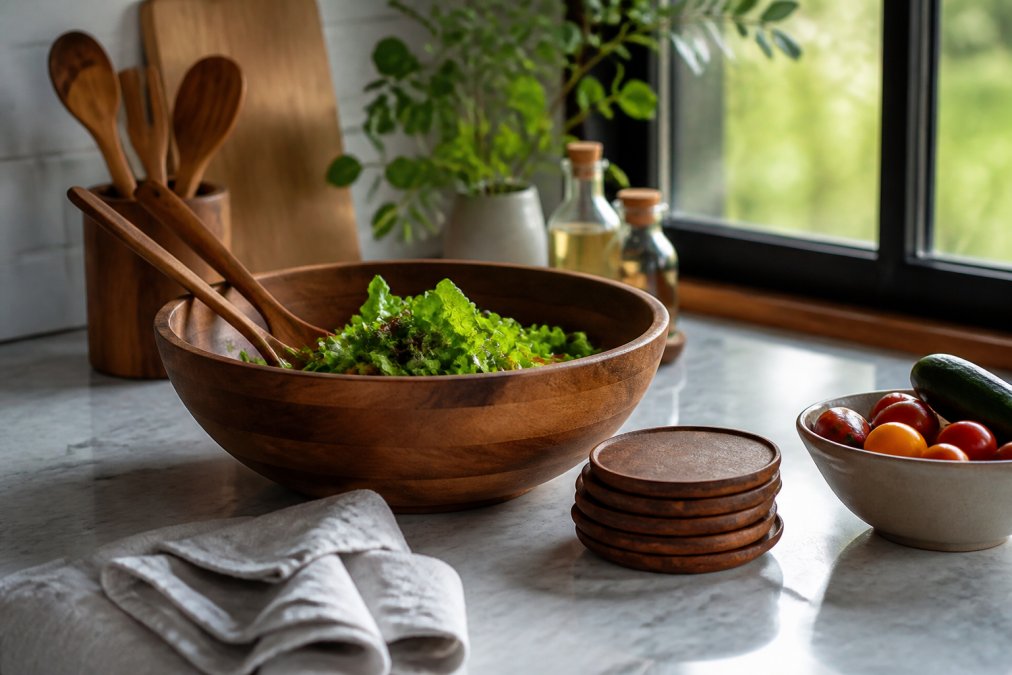
The ForestCraft Teak Salad Set brings the warmth and natural character of teak to both preparation and serving. Available as a complete set or as individual pieces, it's designed to move naturally from mixing a salad in the kitchen to sharing it around the table. Teak's warm grain gives each piece its own character, while proper hand washing, prompt drying, and occasional conditioning help maintain the wood's appearance over time.
Best for: Family meals, entertaining, and anyone who enjoys bringing natural wood directly from the kitchen to the table.
ForestCraft Utensils (Teak)
ForestCraft Teak Utensils bring natural warmth to everyday cooking while offering a wood surface that's gentle on non-stick and ceramic cookware. Designed to feel comfortable in the hand, they're the kind of tools that can become familiar companions beside the stove—used for weekday dinners, favorite family recipes, and meals prepared for guests.
Like other natural wood kitchenware, teak utensils should be hand washed, dried promptly, and conditioned occasionally when the wood begins to appear dry.

Mediterranean Olive Set
The ForestCraft Mediterranean Olive Set celebrates one of the most visually distinctive woods used in the kitchen. Olive wood is known for its dense structure, warm coloring, and dramatic swirling grain, giving every piece a naturally individual appearance.
The five-piece set brings that character into everyday cooking and serving, where the utensils can be enjoyed as much for their natural beauty as for their usefulness. With proper hand washing, prompt drying, and occasional conditioning, olive wood can remain a beautiful part of the kitchen for years to come.
Best for: Cooks who appreciate distinctive natural grain, thoughtful gifts, and kitchen tools beautiful enough to leave on display.
ForestCraft Acacia Serving Bowl
The ForestCraft Acacia Serving Bowl collection includes four complementary sizes, each showcasing acacia's distinctive natural grain. Natural variations in color and pattern give individual bowls their own character, making them as inviting on the table as they are useful for serving.

Best for: Family-style meals, entertaining, and bringing a warm natural element to the table.
ForestCraft Prep Boards Stainless Steel Set
The ForestCraft Prep Boards 3-Piece Stainless Steel Cutting Board Set offers a practical alternative to traditional wood preparation surfaces. The non-porous stainless-steel surface is designed for straightforward cleanup and resists absorbing moisture and odors. With three board sizes, integrated juice grooves, non-slip bases, and dishwasher-safe construction, the set is well suited to busy kitchens where easy care is a priority.
Best for: Everyday food preparation, easy cleanup, and cooks who prefer a low-maintenance prep surface.
Japanese Walnut Coasters
The ForestCraft Japanese Walnut Coasters bring the rich color and refined grain of walnut to one of the simplest moments around the table—sharing a drink and conversation. Designed to help protect table surfaces from everyday use, they're understated enough for daily coffee yet distinctive enough to bring out when guests arrive.
Best for: Coffee tables, dining spaces, entertaining, and adding a subtle natural accent to the home.
ForestCraft Baltique Marrakesh 7-Piece Utensil Set
The ForestCraft Baltique Marrakesh 7-Piece Cooking Utensil Set takes a more colorful approach to natural kitchenware. Crafted from layers of birch hardwood, the laminated construction creates the distinctive pattern and vibrant character of each utensil. The seven-piece collection provides a coordinated set of everyday cooking tools designed to be safe for use with non-stick cookware.
For a kitchen that usually leans toward natural wood tones, the Marrakesh collection can also provide an unexpected accent—bringing craftsmanship and personality to the tools used for preparing everyday meals.
Best for: Cooks who want a coordinated utensil collection with distinctive color and character.
Explore the ForestCraft Kitchenware Collection →
Product |
Material |
Best For |
|---|---|---|
ForestCraft Teak Salad Set |
Teak |
Family meals & serving |
ForestCraft Teak Utensils |
Teak |
Everyday cooking |
ForestCraft Mediterranean Olive Set |
Olive wood |
Cooking, serving & gifting |
ForestCraft Acacia Serving Bowl |
Acacia |
Family-style meals & entertaining |
ForestCraft Prep Boards |
Stainless steel |
Easy-care food preparation |
ForestCraft Japanese Walnut Coasters |
Walnut |
Coffee, guests & conversation |
ForestCraft Baltique Marrakesh 7-Piece Set |
Laminated birch |
Colorful everyday cooking |
How to Care for Kitchenware for the Long Term
Thoughtful care can make a meaningful difference in how kitchenware looks and performs over time. The right routine depends on the material, but quality kitchenware generally doesn't require complicated maintenance. A few simple habits—washing appropriately, drying thoroughly, and conditioning natural wood when needed—can go a long way toward preserving the pieces you use every day.
Wood Care: Oiling, Drying, and Storage
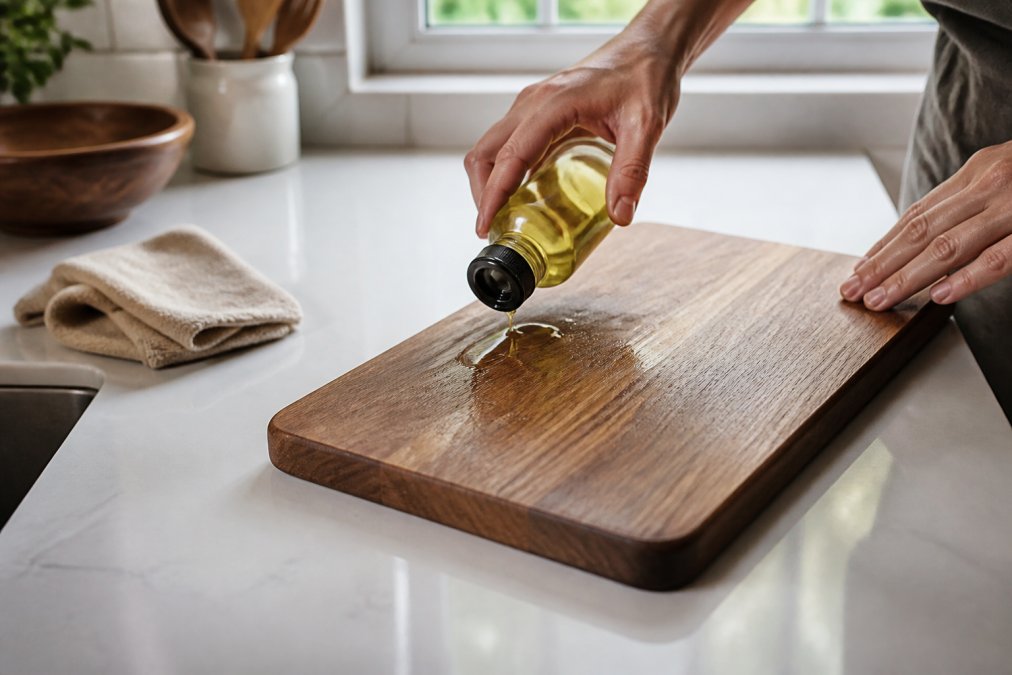
Caring for wooden kitchenware comes down to a few simple habits: hand wash it rather than soaking it, dry it promptly, and condition the wood when it begins to look or feel dry. Avoid dishwashers unless a product is specifically identified as dishwasher-safe, since prolonged moisture, high heat, and harsh detergents can be hard on natural wood.
When conditioning is needed, use a food-safe oil or wood conditioner appropriate for kitchenware and follow the product's care instructions. The right frequency depends on the wood, how often the piece is used and washed, and even the climate in your home. Rather than relying on a fixed schedule, let the appearance and feel of the wood be your guide.
Storage matters too. Allow wooden pieces to dry completely before putting them away, and avoid prolonged exposure to strong heat or direct sunlight. Simple care like this helps preserve the natural grain and character that made the piece appealing in the first place.
Stainless Steel: Simple Everyday Care
Stainless steel requires considerably less routine care than natural wood. The ForestCraft Prep Boards are dishwasher-safe and designed for straightforward cleanup after food preparation. For hand washing, mild dish soap and a soft sponge or cloth are usually all that's needed. Avoid unnecessarily abrasive cleaners or scrubbers that may affect the surface finish, and drying after washing can help minimize water spots.
That easy-care routine makes stainless steel particularly useful alongside natural wood: each material can serve the part of the kitchen where its particular strengths are most useful.
Choosing More Thoughtfully
Choosing kitchenware thoughtfully isn't only about finding something beautiful today. It's also about considering whether a piece suits your needs well enough that you'll want to keep using and caring for it over time.
Natural materials can encourage a different relationship with everyday objects. Wood can be conditioned as it begins to look dry. Signs of use can become part of its character. A well-chosen serving bowl, utensil, or set of coasters can remain part of familiar routines rather than being treated as something disposable.
Buying fewer pieces, choosing them carefully, and caring for what you already own is a simple approach to a more intentional kitchen. It also fits naturally with the ForestCraft belief that the things in our homes should support everyday life rather than compete for our attention.
Which Material Is Right for Your Kitchen?
The right choice depends less on finding one universally “best” material and more on understanding how you cook, serve, and care for the things in your kitchen.
If easy cleanup is the priority, stainless steel offers a non-porous preparation surface with relatively little routine maintenance.
If you enjoy the warmth and individual character of natural wood, teak, acacia, olive wood, and walnut each bring something different to the kitchen and table. They ask for a little more care, but that care is part of living with a natural material.
Laminated hardwood and pakkawood offer another balance, retaining much of the warmth and character associated with wood while providing additional dimensional stability.
And you don't have to choose only one. A kitchen can comfortably include stainless-steel prep surfaces, wooden cooking utensils, an acacia bowl for serving, and walnut coasters waiting on the table for coffee with a friend.
The goal isn't to fill the kitchen with more things. It's to choose useful pieces that fit naturally into the way you prepare food, welcome people, and share life around the table.
A Kitchen Made for Everyday Moments
The pieces we use most often in the kitchen rarely stay confined to the kitchen. A serving bowl finds its way to the family table. A favorite utensil becomes part of a familiar recipe. Coasters come out when a friend stops by for coffee. Over time, useful objects become part of the rhythms and memories of home.
Choosing kitchenware thoughtfully means finding materials that fit the way you live, understanding how to care for them, and selecting pieces you'll enjoy reaching for again and again. Whether that means the warmth of natural wood, the practicality of stainless steel, or a combination of both, quality begins with choosing with purpose.
At ForestCraft, that's what we believe kitchenware should do: quietly serve the moments that matter.
Frequently Asked Questions
What materials are good choices for long-lasting kitchenware?
Quality hardwoods such as teak, acacia, olive wood, and walnut can be excellent choices when properly cared for. Stainless steel offers a non-porous, easy-care alternative, while laminated hardwoods and pakkawood combine the appearance of wood with additional dimensional stability. The right choice depends on how the piece will be used and how much routine care you prefer.
How do I choose between wood and stainless steel kitchenware?
Think about how you plan to use the piece. Natural wood brings warmth, individual grain, and character to cooking and serving but generally requires hand washing and occasional conditioning. Stainless steel is non-porous and easier to maintain, making it especially practical for food-preparation surfaces. Many kitchens benefit from having both materials for different purposes.
Can wooden kitchenware go in the dishwasher?
Unless the manufacturer specifically identifies a wooden product as dishwasher-safe, hand washing is the better choice. Prolonged moisture, high heat, and dishwasher detergents can be hard on natural wood. Wash with mild soap, avoid soaking, and dry wooden kitchenware promptly after cleaning.
How often should I oil wooden kitchenware?
There isn't one schedule that works for every piece. How often wood needs conditioning depends on the species, how frequently it's used and washed, and the environment in your home. Rather than following a fixed calendar, condition wooden kitchenware with an appropriate food-safe oil or conditioner when the wood begins to look or feel dry.
How can I help wooden kitchenware last longer?
Simple care makes the biggest difference. Hand wash rather than soak wooden pieces, dry them promptly, avoid prolonged exposure to strong heat or direct sunlight, and condition the wood when it begins to look dry. Always follow the specific care instructions provided with the product.