Why Premium Kitchen Tools Cost More

Table of Contents
- Material Quality and Composition
- Design, Construction, and Finishing
- Manufacturing Quality and Durability
- How to Spot Quality Wooden Kitchenware
- Benefits of High-Quality Kitchen Utensils
- Cost-Per-Use: A Better Way to Compare Value
- Care, Repair, and Long-Term Ownership
- Conclusion
Last Updated: August 21, 2026
Premium kitchen tools can carry noticeably higher price tags, but price alone doesn't determine quality. Better materials, thoughtful design, finishing, manufacturing complexity, and quality control can all add to production cost—and some of those differences can affect how a tool feels, performs, and holds up over time. Understanding what you're actually paying for makes it easier to distinguish a genuinely better kitchen tool from one that simply carries premium branding.
Material Quality and Composition
Material choice is one reason some kitchen tools cost more than others. With wooden kitchenware, differences can begin with the wood species, grade, moisture content, drying process, grain selection, and finishing. With metal products, the grade and thickness of the material and the complexity of forming and finishing can also influence both manufacturing cost and performance.
Hardwoods such as teak, acacia, olive wood, and walnut are valued in kitchenware for different combinations of hardness, grain, appearance, and resistance to everyday wear. Teak is particularly well known for its natural oil content and moisture resistance, while acacia is valued for its hardness and distinctive grain. Olive wood is prized for its dense structure and dramatic swirling grain, and walnut offers a darker color with an attractive, refined appearance. These characteristics can influence how a finished utensil or serving piece looks, feels, and responds to regular kitchen use.
Lower-priced wooden kitchenware may use less expensive wood species, thinner construction, simpler finishing, or composite materials, but price by itself doesn't reveal how long a product will last. Construction quality, moisture exposure, cleaning habits, and maintenance all affect longevity. When comparing wooden utensils, look at the actual material, surface finish, thickness, grain, and care instructions rather than assuming either the cheapest or most expensive option will automatically perform better.

ForestCraft's wooden kitchen utensils provide an example of how natural wood grain and individual variation become part of the finished product. When evaluating wooden utensils like these, consider the material, shape, finish, intended use, and care requirements together rather than judging quality by appearance alone.
Material sourcing can also affect cost, particularly when manufacturers specify particular wood species, grades, dimensions, or documented sourcing requirements. Drying, sorting, machining, sanding, and finishing add additional steps between raw lumber and a finished kitchen tool. Consumers should distinguish these measurable product characteristics from broader claims such as “responsibly sourced” or “sustainable,” which should be supported by specific information or recognized certification rather than assumed from price.
Stainless steel represents a different set of material considerations. In food-contact applications, stainless steel is valued for its smooth, nonabsorbent surface, corrosion resistance, and ease of cleaning when an appropriate grade and finish are used. Material grade, sheet thickness, forming, edge finishing, and overall construction can all affect the cost and feel of a stainless-steel kitchen product.
Design, Construction, and Finishing
Material alone doesn't determine the quality or cost of a kitchen tool. Two products made from the same type of wood or metal can differ substantially in construction, dimensions, finishing, ergonomics, and attention to detail. Those differences require additional manufacturing steps and can influence how a product feels and performs in everyday use.
For wooden kitchenware, shaping and finishing are particularly important. Edges and handles should feel smooth and comfortable, surfaces should be free from splinters or rough areas, and the shape should suit the tool's intended purpose. Sanding, surface preparation, finishing, and inspection all add labor and production time beyond simply cutting a utensil from a piece of wood.

Metal kitchen products involve different considerations. Material thickness, forming, edge treatment, surface finishing, and the way handles, openings, or other features are produced can all affect manufacturing complexity. A higher price may reflect these additional steps, but consumers should still evaluate the finished product rather than assuming that a premium price automatically indicates superior construction.
Manufacturing Quality and Durability
Manufacturing methods are another factor that can influence both price and quality. Additional machining, shaping, sanding, finishing, assembly, and inspection require time, equipment, and labor. The importance of each step depends on the product: a wooden spoon, mixing bowl, and stainless-steel prep board require very different manufacturing processes.
Wooden utensils illustrate how seemingly simple products can require multiple production steps. Wood must be shaped to the desired profile, handles and working surfaces refined, edges smoothed, and the finished piece prepared for food-contact use. Grain direction, dimensions, surface finish, and overall shape can all affect the appearance and usability of the finished utensil.
Construction should also suit the product's intended use. A mixing bowl, for example, needs sufficient stability and appropriate dimensions for mixing and serving, while utensils need shapes and handles suited to their particular tasks. When comparing products, look for design features that serve a practical purpose rather than assuming that added weight, thickness, or complexity automatically means better quality.
Quality control can also add cost when manufacturers inspect materials, dimensions, finish, assembly, or other specifications during production. However, consumers usually cannot determine the rigor of a manufacturer's quality-control process simply from the retail price. Product specifications, warranty information, customer experience, and the condition of the finished item provide more useful evidence than the word “premium” alone.
How to Spot Quality Wooden Kitchenware
Learning to spot quality wooden kitchenware helps explain why some tools command higher prices. While appearance alone can't reveal everything about how a product was made, shoppers can evaluate several practical characteristics, including the wood used, surface finish, shape, comfort, construction, and care instructions.
Grain and surface finish are useful places to start. Natural woods such as teak and acacia can show considerable variation in color and grain, so variation itself isn't a defect. More important is the condition of the finished surface: it should feel smooth and comfortable, without splinters, sharp edges, significant roughness, or areas that appear poorly finished.
Shape, balance, and comfort also matter. A utensil should feel comfortable for its intended task, with a handle that is easy to grip and a working end appropriately sized and shaped for its purpose. Heavier isn't automatically better; good design is about how the dimensions, material, and shape work together during use.
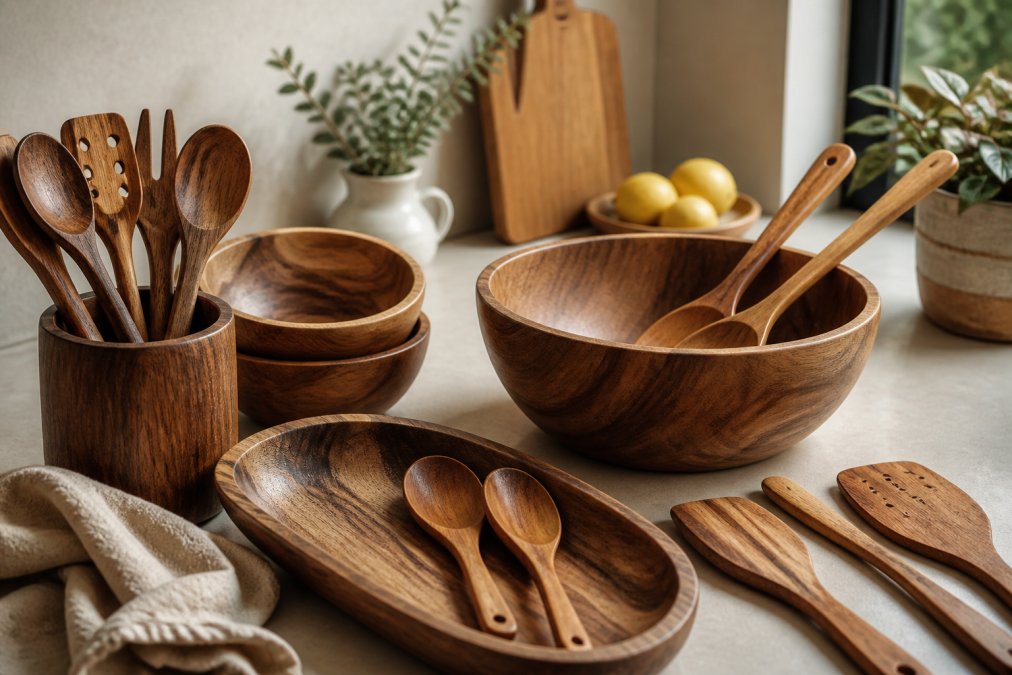
Construction should match the design of the item. A utensil carved or shaped from a single piece of wood should be inspected for cracks, weak areas, or excessive thinness at stress points. Products assembled from multiple components should have secure, clean connections without obvious gaps, loose parts, or excess adhesive.
Inspect wooden pieces for cracks, significant warping, or other damage before use. Natural variations in grain and color are expected, but structural cracks or pronounced distortion can affect usability and may worsen with repeated exposure to moisture and drying.
Finally, check the manufacturer's information about finishes, coatings, cleaning, and maintenance. A product intended for food contact should be suitable for that use, and its care instructions should explain how to clean and maintain it. For wooden kitchenware, following those instructions is particularly important because repeated soaking, high heat, and harsh cleaning methods can shorten the useful life of the wood.
Benefits of High-Quality Kitchen Utensils
Higher-quality kitchen utensils can offer practical benefits beyond appearance. Depending on the material and design, those benefits may include better comfort, thoughtful proportions, easier maintenance, greater resistance to everyday wear, and a more enjoyable experience during cooking and serving. The key is determining whether those advantages are actually present in the product rather than assuming they come automatically with a higher price.
Durability can be one benefit of choosing a well-made kitchen tool, but useful life varies considerably by material, construction, frequency of use, and care. Wooden utensils generally benefit from prompt hand washing, thorough drying, and following the manufacturer's maintenance instructions. Stainless-steel products have different care requirements. Choosing a tool suited to its intended use—and caring for it appropriately—can help reduce unnecessary replacement over time.
Consistency and usability matter as well. A thoughtfully designed utensil should feel comfortable and predictable each time it is used, while a cutting or prep surface should provide the characteristics appropriate for its intended task. Shape, dimensions, surface characteristics, and ease of cleaning often matter more in everyday use than whether a product is labeled “premium.”
Aesthetics can also be part of the value. Natural wood brings warmth, grain variation, and visual character to the kitchen and table. A well-shaped wooden spoon or a teak salad bowl and utensil set can serve a practical purpose while also being attractive enough to leave on display or bring directly to the table. For some buyers, that combination of usefulness and natural appearance is part of what makes a better-made kitchen tool worth considering.

Food-contact surfaces also need to be chosen and maintained with cleaning in mind. Smooth, nonabsorbent materials such as appropriately finished stainless steel can be relatively easy to clean, while wooden utensils and serving pieces require care appropriate to the wood and finish. Regardless of material, safe food preparation depends on proper cleaning, drying, maintenance, and replacing an item if its surface becomes damaged in a way that makes it difficult to clean effectively.
Versatility can add value when it comes from good design. A well-designed wooden spoon, for example, may work for stirring, mixing, folding ingredients, and serving. Other tools are intentionally specialized for a particular task. The better question isn't whether a utensil is expensive or inexpensive, but whether its shape, size, material, and construction suit the way it will actually be used.
Cost-Per-Use: A Better Way to Compare Value
Purchase price tells you what a kitchen tool costs today, but it doesn't necessarily tell you what kind of value it will provide over time. One useful way to compare products is cost per use: divide the purchase price by the number of times the item is actually used. A higher-priced tool that is used frequently and remains serviceable for a long time can ultimately cost less per use than a cheaper product that is rarely used or replaced more often.
Consider two hypothetical kitchen utensils. If a $10 utensil is used 200 times before it is replaced, its cost works out to 5 cents per use. If a $30 utensil remains useful for 1,000 uses, its cost falls to 3 cents per use. Those numbers aren't predictions of how long a particular product will last; they simply illustrate why purchase price and long-term value aren't always the same thing.
This way of thinking can be useful when comparing products in the ForestCraft Kitchenware collection as well. Rather than evaluating a wooden utensil, bowl, or prep surface by price alone, consider how often you expect to use it, whether its material and design suit your needs, what care it requires, and whether you are likely to keep reaching for it over time.
The same calculation can be applied to different materials and product types. A prep board used several times each week, for example, may provide more value over its useful life than a less expensive board that is seldom used or poorly suited to the owner's needs. The important variables are the actual purchase price, frequency of use, useful life, and any maintenance or replacement costs—not whether the product is marketed as “budget” or “premium.”
Longevity can also affect consumption and waste. Keeping a functional kitchen tool in service longer may reduce the need for repeated replacements, but durability depends on the product and how it is used and maintained. Choosing fewer tools that genuinely fit your cooking habits can be more practical than accumulating products—at any price point—that receive little use.
Care, Repair, and Long-Term Ownership
Another part of long-term value is what happens when a kitchen tool begins to show wear. Some materials and designs allow minor maintenance or refinishing, while others may need to be replaced once damaged. Understanding what can—and cannot—be maintained helps consumers make more informed buying decisions.
Some wooden kitchenware can benefit from light maintenance when the manufacturer permits it, such as conditioning an unfinished or appropriately finished surface with a suitable food-contact product. Minor surface roughness may sometimes be addressed according to the manufacturer's care guidance. Stainless steel can often be cleaned and maintained without specialized treatment, although deep damage, deformation, sharp edges, or other safety concerns may mean an item should be replaced rather than repaired.
There is also a less measurable aspect of value: whether people enjoy using and caring for a product. A comfortable utensil, attractive serving bowl, or useful prep tool may become a familiar part of everyday cooking simply because its owner repeatedly chooses it over alternatives. That kind of attachment doesn't establish objective product quality, but it can influence how much practical value someone receives from a purchase.
Caring for kitchen tools can contribute to longevity as well. Following cleaning and maintenance instructions, avoiding uses for which a product wasn't designed, and addressing damage when appropriate can help preserve function and appearance. A higher purchase price doesn't guarantee long life, but choosing an appropriate product and maintaining it properly can improve the odds that it remains useful.
Conclusion
So, why do premium kitchen tools cost more? In some cases, the higher price reflects more expensive materials, additional manufacturing and finishing steps, thoughtful design, or greater attention to construction. But a premium price is not proof of premium quality. The best way to judge value is to look at what the product is made from, how it is constructed, how well it suits its intended purpose, what care it requires, and how often you are likely to use it. A well-chosen kitchen tool doesn't have to be the most expensive option—it needs to be one that performs well, fits your needs, and remains useful over time.
Frequently Asked Questions
What factors contribute to the higher price of premium kitchen tools?
Higher prices can reflect more expensive materials, additional shaping and finishing, more complex construction, quality-control steps, packaging, branding, and other production costs. With kitchen tools, material grade, dimensions, surface finish, ergonomics, and manufacturing complexity can all influence price. However, a higher price alone does not prove that a product is better made, so shoppers should evaluate the actual specifications and construction rather than relying on the word “premium.”
How do I know if premium kitchen tools actually last longer?
There is no reliable lifespan that applies to all premium kitchen tools. Durability depends on the material, construction, frequency of use, care, and the tasks for which the product is used. Look for appropriate materials, smooth finishing, sound construction, clear care instructions, and design features suited to the tool's intended purpose. Warranty information and credible customer experience can also provide useful evidence when comparing products.
Are expensive kitchen tools worth it for home cooking?
They can be, but price should not be the deciding factor. A higher-priced kitchen tool may be worthwhile when its material, design, comfort, durability, or appearance provides benefits you will actually use. Cost per use can be a helpful way to think about value: a tool that costs more initially but is used frequently and remains serviceable over time may provide better value than one that is cheaper but rarely used or replaced more often.
What should I look for when buying long-lasting kitchenware?
Look at the material, construction, surface finish, dimensions, comfort, intended use, and care requirements. For wooden kitchenware, inspect for smooth surfaces, structural cracks, significant warping, and poorly finished areas while remembering that natural grain and color variation are normal. For metal products, consider the material grade, thickness, edge treatment, and overall construction. Above all, choose tools suited to how you actually cook and follow the manufacturer's care instructions.