How to Identify Durable Wooden Kitchenware

Table of Contents
- Understanding Wood Hardness and the Janka Scale
- Best Wood for Kitchen Utensils
- Examining Grain Structure and Porosity
- How to Care for Wooden Kitchenware
- When to Replace Wooden Spoons and Utensils
- Visual Inspection: Signs of Quality and Wear
- Repairing Minor Damage to Extend Lifespan
- Conclusion
Last Updated: August 24, 2026
Understanding Wood Hardness and the Janka Scale
The Janka hardness scale is one useful way to compare wood species used for kitchenware. The test measures the force required to press a steel ball halfway into a wood sample, providing an indication of the wood’s resistance to denting and indentation. A higher Janka rating generally means a harder wood, but hardness alone does not determine how well a spoon, cutting board, or serving piece will perform over time.
For kitchen tools, Janka hardness is best considered alongside other characteristics such as grain structure, moisture resistance, dimensional stability, construction, and care. A very hard wood may resist dents and scratches well, but that does not automatically make it the best material for every kitchen application. Likewise, a moderately hard wood can provide excellent service when it is well made and properly maintained.

The Janka scale is therefore most useful as one piece of the durability picture rather than a stand-alone quality score. When evaluating wooden kitchenware, consider the wood species along with the construction and finish of the individual piece. Smooth surfaces, sound construction, appropriate wood selection, and proper care can matter just as much in everyday use as the hardness rating itself.
Best Wood for Kitchen Utensils
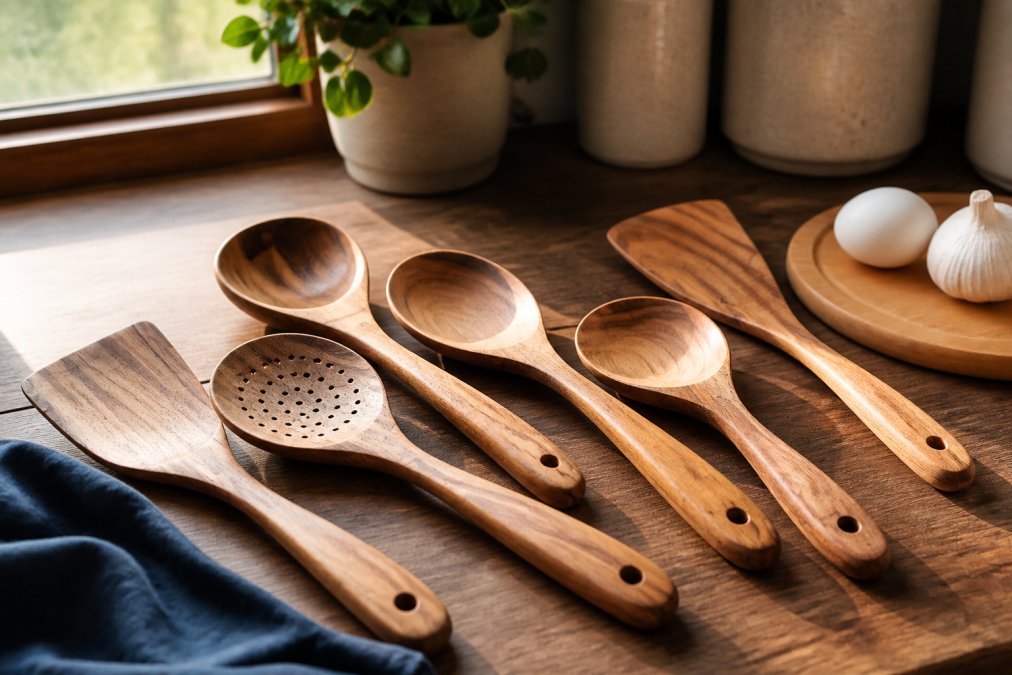
Not every wood species is equally well suited to kitchen use. Good choices balance durability with characteristics such as moisture resistance, grain structure, stability, weight, and ease of maintenance. Teak, olive wood, and acacia are three popular hardwoods used for kitchen utensils, each offering a different combination of appearance, durability, and care requirements.
Teak: Oil-Rich and Moisture-Resistant
Teak is valued for its natural oils, dimensional stability, and resistance to moisture, qualities that have long made it useful in applications where wood is regularly exposed to changing conditions. Its moderate hardness and natural oil content can make it a practical material for kitchen utensils and serving pieces, particularly when the wood is properly finished and cared for.
Like other natural wooden kitchenware, teak can change in appearance with use and age. Its color may deepen or develop a patina over time, while repeated washing can eventually leave the surface looking drier. Periodic conditioning with an appropriate food-safe oil can help maintain the wood’s appearance and reduce excessive drying.
Teak’s combination of stability, durability, and distinctive grain makes it appealing for utensils that are handled frequently. When evaluating a teak piece, look beyond the species name and examine the actual workmanship: the surface should be smooth, edges should be well finished, and the piece should feel solid without visible cracks or rough areas.
The ForestCraft Kitchenware collection includes wooden utensils and serving pieces selected for their natural appearance and practical kitchen use. When comparing ForestCraft pieces—or any wooden kitchenware—consider the specific wood species, construction, finish, intended use, and care instructions rather than relying on appearance alone.
Olive Wood: Dense and Distinctive
Olive wood is a dense hardwood valued for its durability and distinctive grain. Its hardness can help it resist everyday dents and wear, while its naturally varied grain gives utensils and serving pieces a substantial, handcrafted appearance. As with other wood species, however, durability depends on more than hardness alone; construction, finish, use, and care all influence how well a piece holds up over time.
One of olive wood’s most recognizable characteristics is its appearance. Cream, golden, and deeper brown tones often run through dramatic, irregular grain patterns, meaning no two pieces look exactly alike. With use and periodic conditioning, the color and grain can become richer and more pronounced, which is part of the appeal of natural wooden kitchenware.
Olive wood can also feel relatively substantial in the hand because of its density. That weight may be appealing in serving pieces, spoons, and other utensils where a solid feel is desirable, although personal preference plays an important role. When choosing olive wood kitchenware, look for a smooth finish, comfortable balance, and an absence of cracks, rough edges, or other workmanship issues.
Acacia: Distinctive Grain and Durability
Acacia is popular for kitchenware because it combines durability with considerable visual variation. Depending on the particular acacia species, its hardness and appearance can vary, but many types used for household goods produce sturdy pieces with attractive grain. Colors can range from lighter golden tones to deep brown, often with noticeable swirls, waves, or contrasting grain patterns.
Like other natural wood kitchenware, acacia benefits from proper cleaning, thorough drying, and periodic conditioning when the surface begins to look dry. The amount of maintenance needed depends on the individual piece, its finish, how frequently it is used, and the conditions in which it is stored. Regular care can help reduce excessive drying and preserve the wood’s appearance.
Acacia's varied grain is part of its appeal, but appearance alone does not establish quality. Examine the surface and edges for smooth finishing, and look for cracks, splinters, poorly finished areas, or other defects. A well-made piece should feel comfortable and solid in the hand, without rough areas that could worsen with repeated washing and use.
ForestCraft includes acacia kitchenware that highlights the natural color and grain variation associated with the wood. When comparing acacia pieces, consider the design and intended use along with the quality of the individual piece. A utensil or serving piece that combines sound construction, a smooth finish, and practical design is more meaningful than the species name alone.
Examining Grain Structure and Porosity
Grain structure can provide useful clues about a wooden kitchen tool, but it should not be treated as a simple measure of quality. Wood species differ in grain pattern, pore structure, density, and stability, and these characteristics can affect how a finished piece looks, feels, and responds to repeated use. The quality of the finish also matters because a properly prepared surface should feel smooth and comfortable regardless of whether the natural grain is visually subtle or pronounced.
When examining wooden kitchenware, pay particular attention to the finished surface rather than judging the piece solely by whether the grain appears “open” or “closed.” Look for smooth, evenly finished areas without splinters, deep pits, cracks, or raised fibers. Edges and transitions should also feel smooth, especially on spoons and utensils that will be handled frequently or used against cookware.
Moisture can affect any unfinished or poorly maintained wooden kitchen tool. Repeated wetting and drying may contribute to roughness, warping, or cracking over time, which is why proper washing, thorough drying, and appropriate conditioning are important. How quickly a particular piece shows these effects depends on the wood species, construction, finish, frequency of use, and care it receives.
A simple hands-on inspection can still tell you a great deal before purchase. Run your fingers over the surface and edges, looking for areas that feel rough, fuzzy, cracked, or poorly finished. Examine the piece from several angles for obvious defects or excessive warping. Natural variations in grain and color are expected—and often desirable—but the finished utensil should feel intentionally shaped, smooth, and ready for regular kitchen use.
How to Care for Wooden Kitchenware
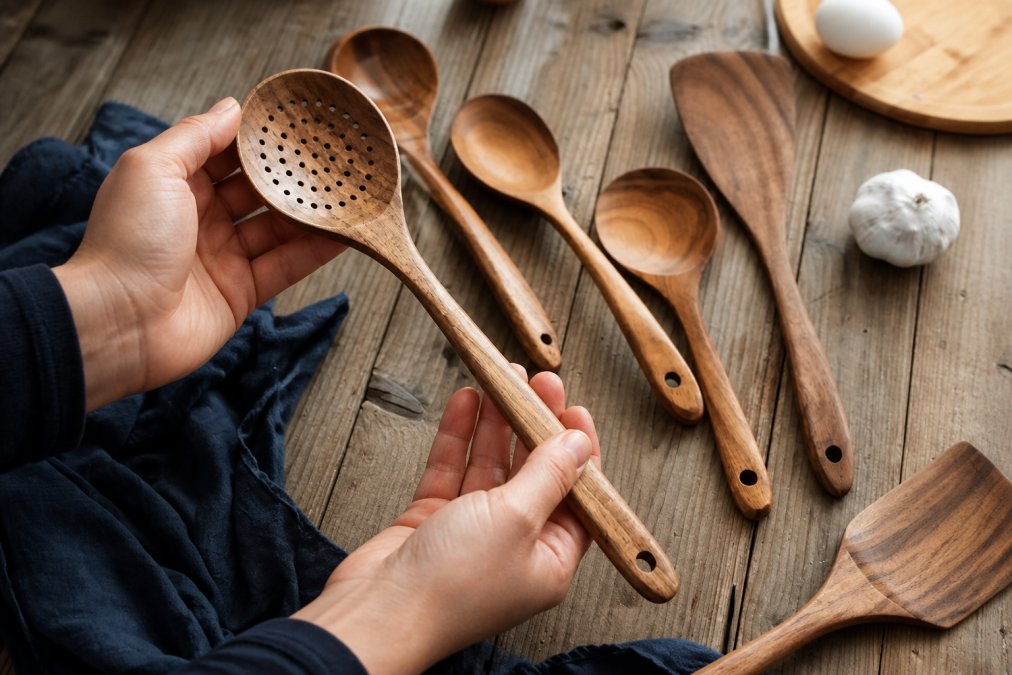
Proper care can significantly extend the useful life of wooden kitchenware. Although care requirements vary by wood species, construction, and finish, a few basic practices apply broadly: avoid prolonged exposure to moisture, dry wooden pieces thoroughly after washing, and condition unfinished or oil-finished wood when it begins to look or feel dry. Always follow the manufacturer’s care instructions when they differ from general recommendations.
Hand-Washing and Immediate Drying
Hand-washing is generally the safest choice for natural wooden utensils and cutting boards. Extended exposure to hot water, high heat, strong detergents, and repeated wet-dry cycles in a dishwasher can contribute to drying, warping, cracking, or deterioration of some wooden pieces. If a manufacturer specifically identifies a product as dishwasher-safe, follow the care instructions supplied with that particular item.
Wash wooden kitchenware after use with warm water, dish soap, and a clean sponge or cloth. Avoid prolonged soaking, and dry the piece thoroughly rather than leaving it wet or allowing water to collect on the surface. Prompt drying helps limit the repeated moisture exposure that can contribute to warping, cracking, or a roughened surface over time.
For cutting boards or utensils that have contacted raw meat, poultry, seafood, or other foods requiring additional food-safety precautions, follow current food-safety guidance for cleaning and sanitizing food-contact surfaces. Wash the item thoroughly after use, and use only sanitizing methods appropriate for the material and the manufacturer’s instructions.
Allow wooden kitchenware to dry completely before storing it. Store pieces where they are not exposed to standing water or trapped moisture, and avoid putting damp wooden items into enclosed storage. For cutting boards in particular, allowing air to reach both sides while drying can help promote more even drying.
Oiling and Seasoning Your Pieces
Unfinished or oil-finished wooden kitchenware may benefit from periodic conditioning as repeated washing gradually dries the surface. Food-grade mineral oil is commonly used because it is stable, odorless, and suitable for many wooden food-contact items. Use a product specifically intended for cutting boards or wooden kitchenware, and follow its application instructions.
Explore ForestCraft Utensils →
Rather than oiling on a rigid schedule, pay attention to the condition of the wood. If the surface begins to look noticeably dry, faded, or rougher than usual, conditioning may be appropriate. Apply the product according to its directions, allow it to penetrate as recommended, and remove any excess before returning the item to regular use.
Some wood-care products combine food-grade mineral oil with waxes such as beeswax to provide additional surface conditioning and a smoother finish. These products can be useful for certain cutting boards and utensils, but they should be chosen specifically for food-contact wooden surfaces and applied according to the manufacturer’s directions.
Avoid using oils or finishes simply because they are labeled “natural.” Cooking oils can oxidize or develop unpleasant odors over time, and woodworking finishes are not automatically appropriate for food-contact surfaces. Choose a conditioning product specifically intended for wooden kitchenware and compatible with the finish already on the piece.
When to Replace Wooden Spoons and Utensils
Even well-made wooden kitchenware eventually shows signs of wear. There is no universal replacement schedule for wooden spoons and utensils, so the condition of the individual piece matters more than its age. Regular inspection can help you distinguish normal cosmetic wear from damage that makes an item difficult to clean or uncomfortable to use.
Consider replacing a wooden utensil when it develops deep cracks or splits, persistent splintering, severe warping, or damaged areas that cannot be cleaned or sanded smooth. A small surface mark or shallow scratch does not necessarily mean a piece has reached the end of its useful life, but damage that continues to worsen deserves closer attention.
Persistent odors, staining, or discoloration should also be evaluated in context. Some color change is normal with natural wood and does not automatically indicate that a utensil needs to be discarded. However, if an item develops an unpleasant odor that remains after proper cleaning, shows signs of mold or deterioration, or has damage that makes thorough cleaning difficult, replacement may be the better choice.
A quality wooden utensil can remain useful for many years when it is properly cared for, but lifespan varies widely according to the wood, construction, frequency of use, exposure to moisture and heat, and maintenance. Rather than replacing wooden kitchenware after a predetermined number of years, inspect it periodically and base the decision on its condition and continued suitability for use.
Visual Inspection: Signs of Quality and Wear
A visual and hands-on inspection can reveal a great deal about the quality and condition of wooden kitchenware. Rather than looking for perfectly uniform wood, focus on workmanship, surface condition, structural integrity, and whether the piece appears well suited to its intended use. Natural variations in grain and color are normal and are often part of the appeal of solid wood.
Start with the surface and edges. A new, well-finished utensil should generally feel smooth and comfortable in the hand, without sharp edges, loose splinters, or unexpectedly rough areas. Slight texture from the natural grain is not necessarily a defect, but raised fibers or poorly finished areas may become more noticeable with repeated washing and use.
Next, examine the grain and overall construction. Dramatic swirls, contrasting colors, and irregular grain patterns can occur naturally and do not by themselves indicate poor quality. More important warning signs include visible splits, loose joints on multi-piece construction, significant warping, or cracks that appear likely to expand with continued use.
Color variation is also normal in natural wood. Different portions of the same piece may range from lighter to darker tones, and the appearance may change gradually with use, washing, and conditioning. What deserves attention is a new or unusual change accompanied by other signs of deterioration, such as persistent dampness, an unpleasant odor, softening wood, or visible mold.
For pieces already in use, distinguish ordinary wear from structural damage. Light scratches, utensil marks, and gradual changes in color are common and may simply reflect normal use. Deep gouges, recurring splinters, severe warping, or expanding cracks deserve more attention, particularly when they make the piece difficult to clean or interfere with its intended function.
Repairing Minor Damage to Extend Lifespan
Not every sign of wear means a wooden kitchen tool needs to be replaced. Minor surface roughness, shallow scratches, and small splinters can sometimes be addressed with basic maintenance, provided the piece remains structurally sound. Before attempting a repair, inspect the item carefully for deep cracks, severe warping, loose components, or other damage that may make replacement the better option.
Minor surface scratches or rough areas can often be smoothed with fine-grit sandpaper. Sand lightly in the direction of the grain, removing only enough material to restore a smooth surface. After sanding, clean away all sanding dust and, if appropriate for the particular piece and finish, recondition the wood with a product intended for wooden kitchenware.
A small splinter may also be repairable if it is limited to the surface and the surrounding wood remains solid. Carefully smooth the affected area and inspect it again after subsequent washing and use. If splintering returns, spreads, or is associated with a crack or deteriorating wood, replacing the piece is a safer and more practical choice than repeatedly sanding it.
Stains and discoloration do not always require repair. Natural wood commonly changes color with use, and some food stains may remain even after proper cleaning. Avoid aggressive sanding or unverified cleaning treatments simply to restore a perfectly uniform appearance. If discoloration is accompanied by persistent odor, mold, softening wood, or other signs of deterioration, evaluate whether the item should instead be replaced.
Deep cracks, significant splits, loose joints, severe warping, or widespread deterioration are different from ordinary surface wear. Because these problems can affect the integrity of the piece and make cleaning more difficult, replacement is generally more appropriate than attempting a cosmetic repair. For wooden kitchenware that contacts food, avoid improvised structural repairs unless they are specifically supported by the product manufacturer.
Conclusion
Learning how to identify durable wooden kitchenware means looking beyond appearance or the name of a particular wood species. Hardness can provide useful information, but construction, finish, design, care requirements, and the condition of the individual piece all contribute to how well kitchenware performs over time.
When shopping, look for smooth surfaces, comfortable balance, sound construction, and wood that is appropriate for the intended use. Once a piece is in your kitchen, proper washing, thorough drying, periodic inspection, and appropriate conditioning can help preserve its appearance and extend its useful life.
ForestCraft offers wooden kitchenware in a variety of natural woods and designs for cooking, serving, and gathering around the table. If you're looking for durable wooden utensils, choose pieces that fit the way you cook and that you'll be comfortable caring for over the years ahead.
Frequently Asked Questions
What should you look for when buying durable wooden kitchenware?
Look beyond the wood species and examine the individual piece. Durable wooden kitchenware should have sound construction, a smooth and comfortable finish, well-finished edges, and no obvious cracks, loose splinters, or severe warping. Consider the wood's characteristics, intended use, care requirements, weight, and balance as well. Hardness can be useful information, but no single Janka rating or wood species guarantees that a kitchen tool will be durable.
How can you tell if wooden kitchenware is high quality?
High-quality wooden kitchenware should feel solid, comfortable, and intentionally finished. Look for smooth surfaces and edges, sound construction, and an absence of cracks, loose joints, or persistent splintering. Natural variations in grain and color are normal and should not be mistaken for defects. The quality of the construction and finish is generally more informative than whether the wood looks perfectly uniform or feels especially heavy.
When should you throw out wooden utensils and replace them?
Consider replacing a wooden utensil when it develops deep cracks or splits, recurring splinters, severe warping, loose components, visible mold or deterioration, or damage that makes it difficult to clean or use properly. Normal scratches, gradual color changes, and minor surface wear do not automatically mean a piece needs to be discarded. There is no universal replacement age for wooden utensils, so inspect each piece periodically and base the decision on its condition rather than the number of years you've owned it.
What's the difference between hardwood and softwood for kitchen tools?
The terms hardwood and softwood describe botanical groups rather than providing a simple measure of how hard or durable a wood actually is. Hardwoods generally come from broad-leaved flowering trees, while softwoods generally come from conifers. Many popular kitchen woods—including teak, olive, acacia, and maple—are hardwoods, but individual species vary considerably in hardness, grain structure, stability, and other characteristics. When choosing kitchen tools, evaluate the specific wood and the quality of the finished piece rather than assuming that every hardwood is automatically better than every softwood.