Minimalist Kitchen Tools for Small Spaces: 7 Essentials

Table of Contents
- The Core of a Minimalist Kitchen: Tools That Earn Their Place
- 7 Minimalist Kitchen Tools for Small Spaces Worth the Counter Space
- How to Spot Quality Wooden Kitchenware That Lasts
- Maximizing Small Kitchen Storage with Vertical Solutions
- Maintenance and Longevity: Caring for Your Minimalist Tools
- Conclusion: Build a Kitchen That Works for You
- Frequently Asked Questions
Last Updated: September 24, 2026
A small kitchen works better when the tools you use most are easy to reach and everything else has a sensible place to go. You don’t need to buy an entirely new set of equipment to get there. Start with the meals you actually make, notice which tools you reach for, and look for duplicates that take up valuable drawer or counter space.
This guide covers seven useful tools for a compact kitchen, along with practical ways to choose and store them. Some will earn a place in almost any kitchen; others depend on how you cook. The goal is a setup that makes everyday meals easier without filling the space with equipment you rarely use.
The Core of a Minimalist Kitchen: Tools That Earn Their Place
Start With the Tools You Actually Use
Before buying a space-saving gadget, look at what you already use. For two weeks, make a quick note of the tools you reach for when preparing your usual meals. Notice duplicates, but also notice the occasional tool that serves a real purpose, such as a baking pan you use once a month. Frequency is helpful information; it isn’t the only reason to keep something.
When you’re ready to free up space, start with duplicates and items that no longer suit the way you cook. A tool that does several jobs can be useful, but only if it does the jobs you need it to do. There’s no requirement that every item in a small kitchen serve multiple purposes.
Arrange Your Kitchen Around Your Routine
Store everyday prep tools near the place you prepare food, and cooking utensils where you can reach them while cooking. The best arrangement depends on your counter space, cabinets, and how you move through the room. Keeping a cutting board and knife easy to retrieve can be more useful than finding a permanent place for them on the counter.
When choosing a tool, consider how it feels in your hand and whether you have room to use and store it. A cutting board should sit steadily on your work surface; if it slides, place a damp towel beneath it. Put heavier or less frequently used equipment somewhere you can retrieve it comfortably, rather than forcing it into an awkward corner.
7 Minimalist Kitchen Tools for Small Spaces Worth the Counter Space
These seven tools can be useful in a compact kitchen, but you may not need all of them. Choose according to the meals you make, the space you have, and the equipment you already own. A tool earns its place when you use it and can store it comfortably.
1. A High-Quality Chef's Knife
A chef’s knife handles many everyday prep tasks, including chopping vegetables, slicing fruit, and mincing herbs. Choose a blade size and handle that feel comfortable and controlled in your hand; eight inches is a common option, but a smaller knife may suit your hands or workspace better. A chef’s knife is a useful starting point, though you may still want a paring knife for small, precise work or a serrated knife for bread.
If you’re starting from scratch, you can buy a knife you’ll regularly use before deciding whether you need a full set. Keep its edge maintained, use it on a stable cutting board, and store it with the blade protected. Follow the maker’s sharpening guidance; a honing steel and a sharpener serve different purposes.
2. A Multi-Functional Immersion Blender
An immersion blender can be a practical choice when counter and cabinet space are limited. It lets you blend many soups and sauces in a suitable pot or container, then stores in a drawer or cabinet. Some models include attachments for whisking or chopping, but those functions depend on the model you choose.
Think about what you blend most often before buying one. An immersion blender may be enough for occasional soups and sauces, while someone who makes smoothies regularly might prefer a countertop or single-serve blender. Compare the attachments, cleaning instructions, and storage space each option requires, then choose the one that fits your routine.
3. The Versatile Cast Iron Skillet
A cast-iron skillet can handle several cooking tasks in one pan, from browning food on the stovetop to baking cornbread or a skillet cookie. That versatility may make it useful in a small kitchen. Check the skillet maker’s instructions before putting it in the oven, particularly if it has a separate handle or other attached parts.
Cast iron is heavy, so consider whether you can lift, wash, and store it comfortably. Bare cast iron also needs to be dried thoroughly and its seasoning maintained. Choose a size based on the portions you usually cook and the room you have on your stove and in your cabinets. If those tradeoffs don’t suit you, another everyday skillet may be the better choice.
4. A Space-Saving Cutting Board Set
A cutting board is an everyday prep tool, but it should fit both your work surface and your storage space. Different sizes can be handy if you sometimes prepare a full meal and other times cut only a piece of fruit. Before choosing a set, check its dimensions and consider where you’ll keep the boards when they’re clean and dry.
The ForestCraft Prep Boards - 3-Piece Stainless Steel Cutting Board Set offers three boards in different sizes. If you’re considering it for a small kitchen, compare those sizes with your available counter and cabinet space. Follow the manufacturer’s cleaning instructions, and use a board that sits securely while you cut.

5. A Small, Useful Utensil Set
Start with the utensils you use for the meals you make most often. A cooking spoon and a spatula may be enough for some kitchens; others benefit from a slotted spoon or a tool for serving. If you buy a set, check that you’ll use most of its pieces and have a convenient place to store them.
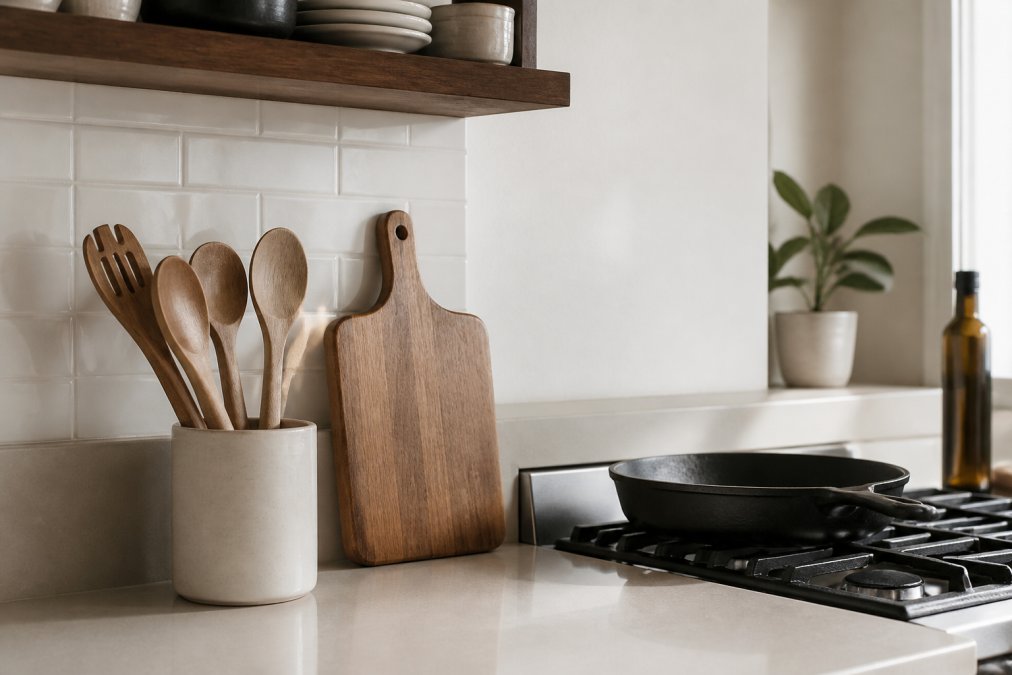
Wooden utensils can bring warmth to a compact kitchen without needing to stay on display. The ForestCraft Island Bamboo Pakkawood 6-Piece Utensil Set is one option if its included tools match your routine. Compare the pieces with what you already own, and follow the product’s care instructions and your cookware maker’s guidance when using them.

6. Measuring Tools and Stackable Storage
Measuring tools and food containers can take up more room than expected when their sizes and lids don’t fit together. If you measure ingredients regularly, choose cups or spoons that nest neatly and are easy to find when cooking. Collapsible cups are another option, but check that they feel sturdy enough for the way you use them.
For food storage, consider containers that stack in the space you actually have. Before buying a new set, look at the containers you own: matching loose lids and removing damaged or unused pieces may free up space without another purchase. Check each container’s instructions before using it in an oven, microwave, or dishwasher.
7. A Compact Countertop Convection Oven
A countertop convection oven may be useful if you regularly cook small portions or want an appliance for toasting, reheating, or baking. Features vary by model, so check its cooking functions before assuming it can replace a toaster or air fryer.
Measure the counter space it will occupy, including the clearance its manufacturer requires around it. Consider how often you would use it and where it would live: in a small kitchen, an appliance that stays on the counter needs to earn that space. If your existing oven and toaster already meet your needs, you may be better off skipping this item.
How to Spot Quality Wooden Kitchenware That Lasts
When space is limited, choose wooden utensils for the jobs you actually do. Before buying, check the tool’s shape and size: a long handle or wide head may be useful while cooking but awkward to store in a shallow drawer. A piece should feel comfortable to hold, with a smooth surface and no visible cracks or splinters.
Wood type alone cannot tell you how long a utensil will last. Construction, use, and care also matter. Check the seller’s material and care information, and avoid assuming that every wooden product has the same finish or cleaning requirements. For a closer look at what to inspect, see our guide to identifying durable wooden kitchenware.
Maximizing Small Kitchen Storage with Vertical Solutions
When drawers and counters feel crowded, look for storage space you can use without making the kitchen harder to work in. Shelf risers, hooks, and narrow organizers may help, depending on your cabinets and layout. Keep the tools you use most often easy to reach, and store occasional equipment where it won’t interrupt everyday prep.
Wall storage can free up a drawer, but it isn’t necessary for every kitchen. If you rent or prefer not to mount anything, consider removable organizers or a container inside a cabinet. Leave enough clear counter space to prepare food comfortably.
Choosing the Right Wall System for Your Space
If you choose a wall-mounted rack, pegboard, or knife strip, check its installation instructions, weight limit, and suitability for your wall. Plan what you’ll hang on it before installing it; lightweight utensils and heavy pans place very different demands on a mounting system. Position it where the tools are convenient to use without obstructing a doorway or work surface.
Protecting Your Tools in Vertical Storage
Clean and dry tools before putting them away. Give wooden utensils room to dry fully, and avoid storing them where they are routinely exposed to steam or splashes. If you use a magnetic knife strip, follow its instructions for placing and removing blades. Our guide to maintaining wooden kitchen utensils covers their ongoing care in more detail.
The Inside-of-the-Door Strategy
The inside of a cabinet door may hold small, lightweight items such as measuring spoons or towels. Check that an organizer will clear the shelves and let the door close fully. Follow its weight limit, and avoid putting sharp tools where they could shift or fall when the door opens.
Maintenance and Longevity: Caring for Your Minimalist Tools
A small collection of kitchen tools is easier to care for when you follow each product’s instructions. Wash cutting boards after use with hot, soapy water, rinse them, and let them air-dry or pat them dry. Clean wooden utensils after use and allow them to dry fully before putting them away. Check the maker’s guidance before oiling wood or placing any board or utensil in a dishwasher.
For a bare cast-iron skillet, wash it after use, dry it thoroughly, and apply a thin layer of oil if its maker recommends it. A small amount of soap is fine for modern seasoned cast iron. For the ForestCraft stainless-steel boards, follow the product’s own cleaning instructions rather than assuming that every stainless-steel board is dishwasher-safe.
Conclusion: Build a Kitchen That Works for You
A useful small kitchen takes shape around the meals you make. Keep the tools you reach for, arrange them where they’re convenient, and reconsider duplicates or equipment that no longer fits your routine. You can make those changes gradually, without replacing everything you own.
If a wooden spoon, spatula, or serving tool would fill a gap in your setup, explore the ForestCraft collection. Compare each piece’s size, purpose, and care instructions with what you already have, and choose one that will earn its place in your kitchen.
Frequently Asked Questions
What are the true must-have minimalist kitchen tools for a small space?
There is no single must-have list for every kitchen. Start with the meals you cook most often and the tools you already use. A comfortable knife, a stable cutting board, and a few cooking utensils may be a practical foundation. Add a skillet or small appliance when you know you’ll use it and have room to store it.
How do you identify high-quality wooden kitchenware when shopping?
Check that a wooden utensil feels comfortable in your hand and has a smooth surface without visible cracks or splinters. Look at its size, shape, material description, and care instructions. Those details tell you more about whether it suits your kitchen than wood type or weight alone.
What are the best multi-functional kitchen gadgets for small apartments?
The best choice depends on what you cook. An immersion blender can be useful for soups and sauces; a countertop oven may suit someone who regularly prepares small portions. Before buying either, check its functions, dimensions, cleaning requirements, and whether it would duplicate something you already own.
What kitchen items should you get rid of to declutter a small kitchen?
Start by reviewing duplicates, containers without matching lids, and tools that no longer fit the way you cook. Keep occasional-use items if they serve a real purpose and you can store them comfortably. Donate usable items you no longer need, and discard damaged items that are unsuitable for continued use.