How to Maintain Wooden Kitchen Utensils

Table of Contents
- Why Wooden Kitchen Utensils Deserve Proper Care
- Daily Cleaning: Hand Washing vs. Dishwasher Safety
- How to Sanitize Wooden Utensils Safely
- Best Food-Safe Oil for Wooden Spoons and Conditioning Frequency
- Removing Stains, Odors, and Minor Damage
- Signs It Is Time to Replace Wooden Kitchenware
- Material-Specific Care for Teak, Acacia, and Olive Wood
- Conclusion
Last Updated: August 26, 2026
Why Wooden Kitchen Utensils Deserve Proper Care
Wooden utensils have been part of kitchens for centuries. They're gentle on cookware, warm to the touch, and develop character over time. Unlike plastic or metal counterparts, they require intentional maintenance to reach their full lifespan.
How long a wooden utensil lasts depends on its construction, wood species, frequency of use, and how it is maintained. Proper care helps reduce warping, cracking, and the buildup of food residue and odors that can affect both function and hygiene. When treated well, quality wooden utensils can remain dependable kitchen tools for years.
This guide covers the complete approach to maintaining wooden kitchen utensils, from daily cleaning through long-term conditioning. Understanding how wood responds to moisture, heat, and use allows home cooks to make choices that extend the life of their tools and keep them performing at their best.
Daily Cleaning: Hand Washing vs. Dishwasher Safety
Hand washing is the best way to protect most wooden utensils. A dishwasher's combination of high heat, prolonged moisture exposure, and strong detergents can cause wood to dry out, warp, crack, or lose its finish over repeated cycles. Unless the manufacturer specifically identifies a wooden utensil as dishwasher-safe, hand washing is the safer choice.
During a dishwasher cycle, wooden utensils are exposed to repeated changes in heat and moisture. Wood naturally expands as it absorbs moisture and contracts as it dries, and repeated exposure to these conditions can place stress on the grain over time. This is why regular dishwasher use can shorten the useful life of many wooden utensils.
Hand washing takes only a few minutes and helps preserve the wood's condition. Rinse the utensil under warm water after use, clean it with a soft cloth or sponge and mild dish soap, and use a soft brush for stubborn food rather than soaking. Towel-dry it promptly, then allow it to air-dry completely before storing.
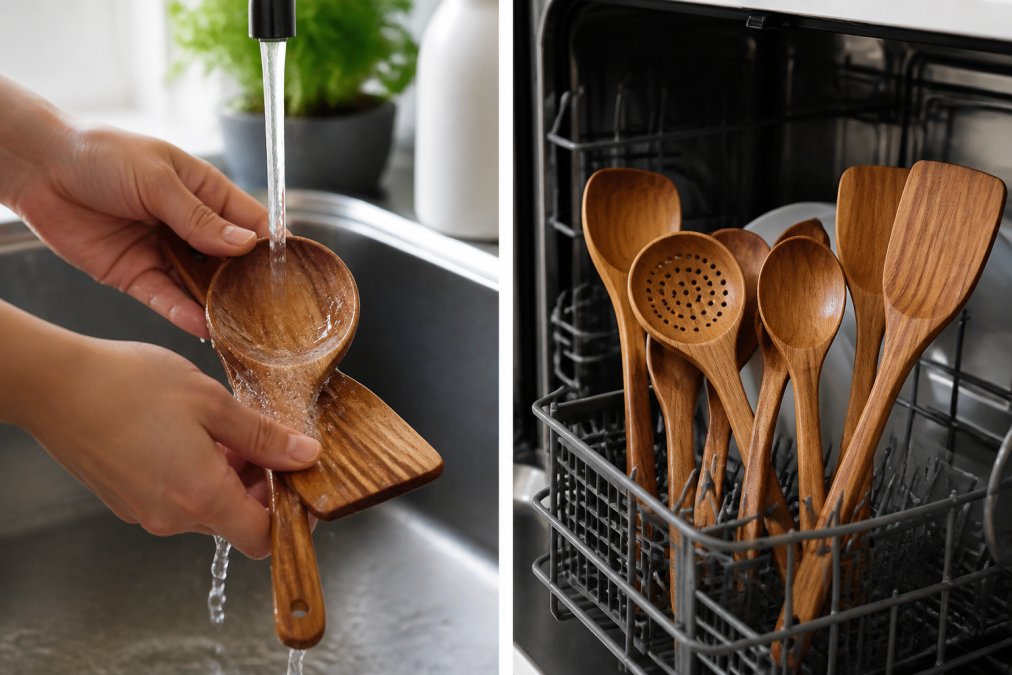
The dangers of soaking wooden utensils
Soaking is one of the most damaging practices for wooden utensils. When wood sits in standing water, fibers absorb moisture unevenly, causing the wood to swell in some areas more than others. This creates internal stress that leads to warping, cracking, and splitting.
The longer a wooden utensil remains submerged, the more opportunity it has to absorb water. Repeated or prolonged soaking can contribute to swelling, warping, cracking, and deterioration of protective finishes. For that reason, wooden utensils are best washed promptly rather than left soaking in the sink.
The solution is prompt cleaning. Rinse food residue under running water, wash with mild dish soap, and use a soft brush or nonabrasive scraper for stubborn food rather than leaving the utensil to soak. Towel-dry promptly, then allow it to air-dry completely before storing.
How to properly dry wooden spoons
Drying is as important as cleaning. Moisture left on the surface can seep into the wood grain, promoting mold growth and warping. Immediately after washing, use a clean, dry cloth to remove surface water, paying special attention to crevices. Then stand the utensil upright in a drying rack or lean it at an angle so air circulates around all sides.
Allow the utensil to air-dry completely before storing. Drying time will vary depending on the utensil, airflow, temperature, and humidity in the kitchen. Once fully dry, store it in a cool, dry location away from direct heat or prolonged moisture.
How to Sanitize Wooden Utensils Safely
Wooden utensils generally do not need special sanitizing after ordinary kitchen use. Prompt, thorough washing with warm water, mild dish soap, and friction helps remove food residue and microorganisms while limiting the amount of moisture absorbed by the wood. The USDA recommends washing utensils and food-preparation surfaces with hot, soapy water after preparing food.
If a wooden utensil has contacted raw meat, poultry, seafood, or another potential source of cross-contamination, follow the utensil manufacturer's cleaning instructions and take extra care to wash all surfaces thoroughly. Utensils with deep cracks, splits, or damaged areas that cannot be cleaned effectively should be replaced rather than relying on repeated disinfecting treatments.
Avoid soaking wooden utensils or routinely treating them with harsh household chemicals. After cleaning, towel-dry the utensil promptly and allow it to air-dry completely before storing. Good cleaning, complete drying, and replacing badly damaged utensils are the most practical ways to keep wooden kitchen tools in good condition.
Best Food-Safe Oil for Wooden Spoons and Conditioning Frequency
Conditioning wooden utensils keeps them moisturized, prevents cracking, and maintains their appearance. The right oil makes a measurable difference in longevity and performance.
Food-grade mineral oil is a common choice for conditioning wooden kitchen utensils because it is odorless, flavorless, and resistant to becoming rancid. When choosing mineral oil, look specifically for a product labeled as food-grade or suitable for use on wooden food-contact surfaces.
Food-safe conditioners that combine mineral oil with beeswax are another option. The wax can add a light protective barrier while the oil conditions the wood. Whatever product you choose, follow the manufacturer's directions and make sure it is specifically intended for cutting boards, butcher blocks, wooden utensils, or other food-contact surfaces.
Avoid using ordinary cooking oils simply because they are edible. Some vegetable and nut oils can oxidize or become rancid over time, potentially leaving wooden utensils with unpleasant odors or a sticky residue.
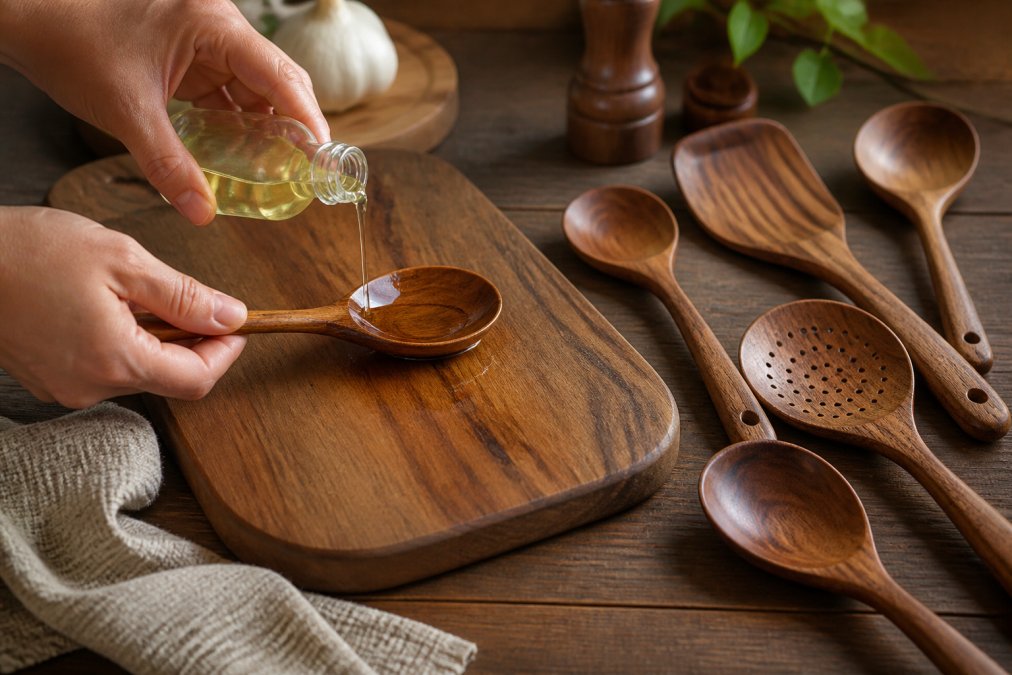
When to oil or condition wooden utensils
There is no single conditioning schedule that works for every wooden utensil. How often a utensil needs conditioning depends on how frequently it is used and washed, the type and finish of the wood, and the humidity in your home. Rather than relying on a strict calendar, pay attention to the condition of the wood.
If the surface begins to look dry, dull, faded, or rough compared with its usual appearance, it may be time to apply a food-safe wood conditioner. Utensils that are washed frequently or kept in a dry environment may need attention more often, while lightly used utensils may need conditioning less frequently.
Recommended oils for wood maintenance
Food-grade mineral oil is a practical choice for routine wooden-utensil care because it does not readily become rancid. Food-safe mineral oil and beeswax blends are also available for people who prefer a conditioner that leaves a light protective coating on the wood.
Apply the conditioner according to the product's directions. In general, start with a clean, completely dry utensil, apply a thin and even coat along the grain, allow the conditioner time to penetrate, and wipe away any excess before returning the utensil to use.
Removing Stains, Odors, and Minor Damage
Over time, wooden utensils can develop stains from food, odors from use, or minor surface damage. Most issues can be addressed without replacing the utensil.
Stains from foods such as beets, tomato sauce, or turmeric may discolor the surface of a wooden utensil without affecting its usefulness. Start with normal hand washing using mild dish soap and warm water. For stubborn discoloration, gently rubbing the affected area with a paste made from baking soda and a small amount of water may help lift surface stains. Rinse promptly and dry the utensil thoroughly afterward.
Strong food odors can sometimes linger in porous wood. Washing promptly after use is the best first step. If an odor remains, a small amount of baking soda can be gently rubbed over the damp surface before rinsing and drying thoroughly. Persistent odors—especially when accompanied by cracks, mold, or other deterioration—may indicate that it is time to replace the utensil.
Repairing minor damage and restoring appearance
Minor surface wear, such as light scratches or slightly rough areas, can sometimes be improved with gentle sanding. If the utensil manufacturer permits refinishing, use fine-grit sandpaper and work carefully in the direction of the wood grain. Remove only enough material to smooth the surface.
After sanding, remove all sanding dust, clean the utensil, and allow it to dry completely. A food-safe conditioner intended for wooden food-contact surfaces can then be applied according to the product's directions.
Deep cracks, significant splits, persistent splintering, or other structural damage are different from ordinary surface wear. These damaged areas can trap food and become difficult to clean effectively. When damage cannot be smoothed away without substantially altering the utensil, replacement is generally the better choice.
Signs It Is Time to Replace Wooden Kitchenware
Even well-maintained wooden utensils eventually reach the end of their useful life. Recognizing when replacement is necessary keeps food preparation safe and hygienic.
Deep cracks or splits that run through the wood grain are a clear warning sign. Damaged areas can trap food residue and become difficult to clean thoroughly, making replacement the safer and more practical choice.
Persistent odors that remain after thorough cleaning can be a sign that food residues or odors have penetrated deeply into the wood. Discoloration alone does not necessarily mean a utensil is unsafe, but staining accompanied by persistent odors, mold, deep cracks, or deterioration deserves closer attention.
Replace a wooden utensil when warping or bending interferes with its safe or effective use. Deep cracks, persistent splintering, loose components on multi-piece utensils, or visible mold that cannot be removed are also good reasons to retire it. The practical question is whether the utensil can still be thoroughly cleaned and used without pieces of damaged wood coming loose.
The good news is that a quality wooden utensil can provide years of service when properly maintained. Wood species, construction, frequency of use, and care all influence lifespan. Starting with durable wooden kitchenware and consistently hand washing, drying, and conditioning it when needed gives the wood the best opportunity to remain functional for the long term.
Material-Specific Care for Teak, Acacia, and Olive Wood
Different woods have different characteristics, and understanding these helps optimize care for each material.
Teak is naturally rich in oils and is valued for its durability and resistance to moisture, making it well suited for kitchen utensils. Even teak benefits from proper care: hand wash it, dry it thoroughly, and condition it when the surface begins to look dry or dull. With regular care, teak can retain its distinctive grain and smooth feel through years of kitchen use. ForestCraft Kitchenware offers teak utensils that showcase the natural warmth and character of this hardwood.

Acacia is a dense hardwood known for distinctive grain patterns and natural variations in color, which means no two pieces look exactly alike. ForestCraft Acacia utensils showcase these natural variations while providing the durability that makes acacia well suited for everyday kitchen use. Like other wooden kitchenware, acacia should be hand washed, dried thoroughly, and kept away from prolonged moisture. Rather than conditioning it according to a fixed schedule, watch the surface of the wood and apply a food-safe conditioner when it begins to appear dry or dull.
Olive wood is prized for its tight grain, warm tones, and striking natural patterns. Proper care helps preserve those characteristics: wash it by hand, dry it promptly, and condition it as needed when the surface begins to lose its natural luster. Avoid prolonged soaking and excessive heat, just as you would with other quality wooden utensils.
Regardless of wood species, the fundamentals of care remain largely the same: hand wash, dry thoroughly, avoid prolonged moisture exposure, and condition the wood when its appearance or texture indicates that it is becoming dry. Individual utensils may respond differently depending on their construction, finish, frequency of use, and environment.
Choosing well-made utensils from quality hardwoods such as teak, acacia, or olive wood provides a strong foundation for long-term use. Proper care then helps preserve the characteristics that make wooden kitchen tools appealing in the first place—their natural grain, comfortable feel, and usefulness in everyday cooking.
Conclusion
Wooden kitchen utensils don't require complicated maintenance. Consistent hand washing, thorough drying, avoiding prolonged soaking, and conditioning the wood when it begins to look dry can go a long way toward preserving its appearance and usefulness.
Just as important is knowing when normal wear has become significant damage. A well-made wooden utensil can provide years of everyday service, but deep cracks, persistent splintering, mold, or damage that prevents thorough cleaning are signs that replacement may be the better choice. Choosing long-lasting kitchenware and caring for it properly can help reduce unnecessary replacement while keeping dependable tools in your kitchen for years.
Frequently Asked Questions
Q: Do wooden utensils need to be oiled?
A: Yes, conditioning can help wooden kitchen utensils resist drying and maintain their appearance over time. Rather than following a fixed schedule, pay attention to the condition of the wood. If the surface begins to look dry, dull, faded, or rough, consider applying a food-grade mineral oil or another conditioner specifically intended for wooden food-contact surfaces.
Q: What is the best type of oil to use on wooden spoons?
A: Food-grade mineral oil is a common choice because it is odorless, flavorless, and resistant to becoming rancid. Food-safe conditioners that combine mineral oil with beeswax are another option. Whatever you choose, make sure the product is specifically intended for cutting boards, wooden utensils, butcher blocks, or other food-contact surfaces, and follow the manufacturer's directions.
Q: How do you sanitize wooden kitchen tools safely?
A: For ordinary kitchen use, promptly hand wash wooden utensils with warm water, mild dish soap, and thorough friction, then towel-dry and allow them to air-dry completely before storing. If a utensil has contacted raw meat, poultry, seafood, or another potential source of cross-contamination, follow the manufacturer's cleaning instructions and wash all surfaces thoroughly. Avoid prolonged soaking, and replace utensils with deep cracks or damage that prevents effective cleaning.
Q: When should you throw out wooden utensils?
A: Replace a wooden utensil when it develops deep cracks, persistent splintering, visible mold that cannot be removed, loose components, or warping that interferes with safe use. Minor surface wear can sometimes be smoothed if the manufacturer permits refinishing, but structural damage that makes the utensil difficult to clean is a good reason to retire it.