Best Oils and Conditioners for Wooden Kitchenware

Table of Contents
- Choosing an Oil or Conditioner for Wooden Kitchenware
- Food-Grade Mineral Oil for Routine Conditioning
- How to Oil Wooden Spoons and Cutting Boards
- Beeswax-Based Conditioners for Wooden Kitchenware
- Conditioning Oils vs. Curing Finishes
- Caring for Wood and Checking for Damage
- When to Condition—and When to Stop Using a Piece
- Choosing the Right Care for Your Wooden Kitchenware
- Frequently Asked Questions
Last Updated: October 8, 2026
Choosing an Oil or Conditioner for Wooden Kitchenware
Caring for wooden spoons, bowls, and cutting boards starts with the manufacturer’s instructions. Some pieces benefit from periodic oiling, while others have a finish that requires different care. Before applying anything, check which products are suitable for your kitchenware’s material, existing finish, and intended use.
For pieces that can be oiled, choose a product specifically labeled for wooden food-contact surfaces. Food-grade mineral oil and conditioners made for cutting boards and utensils are common options. Follow the product’s directions for application, drying or curing, and when the kitchenware can be used again.
This guide explains how to choose an oil or conditioner, apply it correctly, and recognize when a wooden piece needs maintenance or replacement. Conditioning is one part of routine care; it does not replace cleaning or repair cracks, splits, or other damage.
Food-Grade Mineral Oil for Routine Conditioning
Food-grade mineral oil is a common option for wooden cutting boards and utensils when the manufacturer recommends oiling. Choose a product specifically labeled for use on wooden food-contact surfaces, and check that it is compatible with your kitchenware’s existing finish.
Mineral oil is not plant-based, so it may not suit shoppers looking for a plant-derived conditioner. Rather than choosing by the word “natural,” focus on the product’s intended use, ingredients, and care instructions.
Application methods and maintenance schedules vary. Follow the directions supplied with both the kitchenware and the oil, including how much to apply, how long to leave it, and when to wipe away excess. Avoid assuming that every wooden spoon, bowl, or cutting board needs oiling on the same monthly schedule.
How to Oil Wooden Spoons and Cutting Boards
Before you begin, confirm that the manufacturer recommends oiling your piece and that your chosen oil is suitable for its finish and food-contact use.
Step 1: Clean and Let Dry Completely
Clean the kitchenware according to its care instructions. For pieces intended for hand-washing, use mild soap and warm water, rinse, and towel-dry. Allow the wood to air-dry completely before applying oil. For more detail on washing, drying, and storage, read our guide to maintaining wooden kitchen utensils.
Step 2: Inspect the Surface
Check for cracks, splits, splinters, loose joints, or other damage. Oil is a maintenance product, not a repair. Set damaged pieces aside and consult the manufacturer about repair or replacement before using them again.
Step 3: Apply the Recommended Amount
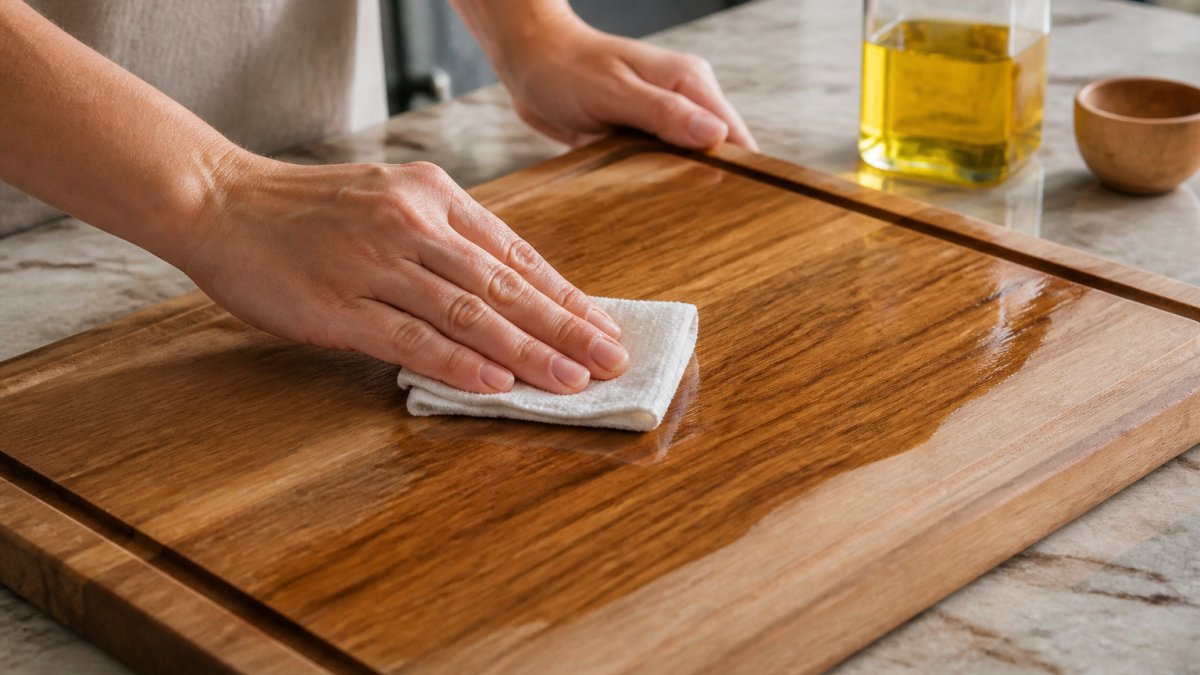
Use a clean, lint-free cloth to spread the oil over the surfaces specified in the care instructions. Follow the oil label’s directions for coverage and quantity rather than repeatedly adding oil until the wood appears saturated.
Step 4: Allow the Recommended Absorption Time
Leave the oil on for the time stated on the label. Different products have different application requirements, so a single waiting time will not suit every oil or conditioner.
Step 5: Remove Excess and Follow Return-to-Use Directions
Wipe away excess with a clean cloth. Follow any additional drying or curing instructions before using the piece with food. Wash reusable cloths or dispose of them according to the product’s safety directions.
When to Repeat
Use the manufacturer’s recommended schedule as your starting point. Check the surface periodically and reapply only as directed. How often a piece needs conditioning depends on its finish, use, washing routine, and storage conditions.
Beeswax-Based Conditioners for Wooden Kitchenware
Some conditioners made for wooden cutting boards and utensils combine beeswax with food-grade mineral oil. These blends offer another maintenance option when the kitchenware manufacturer recommends an oil-and-wax product.
Check the complete ingredient list and intended use before buying. A beeswax-based conditioner may contain mineral oil, so it is not necessarily plant-based. Choose a product labeled for wooden food-contact surfaces and compatible with your piece’s existing finish.
Follow the conditioner’s application instructions, including how much to use, how long to leave it, and how thoroughly to buff away excess. Do not heat the product unless its directions specifically call for it.
Beeswax-based conditioners are also sold for cutting boards, so they should not be limited to decorative or serving pieces. Whether a blend is appropriate depends on the kitchenware and product instructions. Conditioning does not replace washing or make damaged wood suitable for continued food use.
Conditioning Oils vs. Curing Finishes
Routine conditioning and applying a new finish are different tasks. Before choosing a product, establish whether your kitchenware needs maintenance of its existing finish or a manufacturer-approved refinishing process.
Food-grade mineral oil does not cure into a hard finish. On compatible pieces, it is used for periodic conditioning. Follow the label’s instructions for absorption, removing excess, and returning the piece to use.
Drying oils, such as tung oil, harden through a process called curing. A surface that feels dry may not be fully cured or ready for food contact. For example, Waterlox’s pure tung oil application guide states that full curing can take 30 days or more. Follow the instructions for your specific product rather than assuming a universal 24–48-hour waiting period.
Do not assume that every product called “tung oil,” “linseed oil,” or “wood oil” is appropriate for kitchenware. Check the complete formulation, its stated suitability for food-contact surfaces, compatibility with the existing finish, and all application and curing requirements.
For everyday care, use the maintenance product recommended by the kitchenware manufacturer. Avoid switching to a curing finish without confirming that it is appropriate for the piece.
Caring for Wood and Checking for Damage
Good care includes appropriate washing, thorough drying, suitable storage, and conditioning when recommended. Oiling alone cannot guarantee that a wooden piece will resist cracking or warping.
Avoid Soaking and Follow Washing Instructions
For kitchenware intended for hand-washing, wash promptly with mild soap and warm water rather than leaving it submerged. Use a dishwasher only if the manufacturer explicitly identifies the piece as dishwasher-safe.
Allow the Piece to Dry Thoroughly
Towel-dry after washing, then allow air to circulate around the piece. Avoid putting damp utensils into a crowded holder or stacking wet bowls together.
Store Away From Direct Heat
Keep wooden kitchenware away from burners, radiators, and other direct heat sources. Do not use an oven or microwave to speed up drying.
Condition Only as Recommended
Choose a compatible food-contact oil or conditioner and follow the care instructions. Wood species alone does not determine the right product or schedule; the existing finish and construction also matter.
Take Cracks and Splinters Seriously
Inspect pieces regularly for cracks, splits, splinters, loose joints, and surfaces that are difficult to clean. Stop using damaged pieces with food while you check the manufacturer’s repair or replacement guidance. Sanding or applying oil does not close a crack or establish that the piece is suitable for continued use.
When to Condition—and When to Stop Using a Piece
Check your wooden kitchenware periodically and follow its recommended maintenance schedule. A change in appearance can prompt a closer inspection, but it does not automatically mean the piece needs more oil.
A Dry or Faded Appearance
If the surface looks drier or less rich in color than usual, consult the care instructions. For an oil-finished piece, this may indicate that conditioning is due. Other finishes may require a different approach.
A Change in Surface Texture
Inspect any newly rough areas before applying conditioner. Raised grain, worn finish, and splintering need different responses. Oil will not smooth away a splinter or repair damaged wood.
Cracks, Splits, or Loose Joints
These are signs of damage, not simply reminders to re-oil. Set the piece aside and check the manufacturer’s repair or replacement guidance before using it with food again.
Persistent Odors or Unusual Patches
Clean the piece as directed and let it dry thoroughly. If an odor persists or you notice suspected mold, stop using it with food and seek guidance. Do not apply oil to cover the problem.
Changes in Water Beading
Water beading alone does not establish whether a piece needs conditioning or is suitable for food use. Assess its overall condition and care instructions rather than relying on a single water test.
Choosing the Right Care for Your Wooden Kitchenware
The best oil or conditioner is one that suits your kitchenware’s existing finish and is labeled for its intended food-contact use. Food-grade mineral oil and beeswax-based conditioners are common maintenance options for compatible pieces. Curing finishes require a different application process and should be used only when appropriate for the item.
Start with the manufacturer’s care instructions, clean and dry the piece thoroughly, and follow the conditioner’s directions. Check regularly for damage, and remember that oiling does not replace cleaning or repair cracks and splits.
Explore Amari’s ForestCraft collection for wooden kitchenware for preparing and serving meals. Before choosing a piece, review its materials, dimensions, and care information to find an option that fits your routine. Our guide to identifying durable wooden kitchenware explains what to look for when evaluating construction and finish.
Frequently Asked Questions
What oil should I use on wooden kitchenware?
Start with the kitchenware manufacturer’s recommendation. For pieces suitable for oiling, food-grade mineral oil or a conditioner labeled for wooden food-contact surfaces may be appropriate. Check compatibility with the existing finish and follow the product’s application instructions.
How often should I oil wooden spoons and cutting boards?
Follow the recommended schedule for your kitchenware and conditioner. Maintenance needs vary with the finish, frequency of use, washing routine, and storage conditions. Inspect pieces periodically rather than applying the same oiling schedule to every item.
Can I use cooking oil instead of a wooden kitchenware conditioner?
Do not assume that an oil suitable for cooking is also suitable for maintaining wood. Choose a product specifically labeled for wooden food-contact surfaces and recommended for your piece’s finish. If you prefer a plant-based option, check the complete ingredient list and intended use.
Will oiling repair cracks or splits in wooden kitchenware?
No. Conditioning oil does not close cracks, repair loose joints, or remove splinters. Stop using damaged pieces with food and consult the manufacturer about repair or replacement. Do not use oil to cover persistent odors or suspected mold.