How Should You Care for Acacia Cooking Utensils?

Last Updated: November 19, 2026
Quick Summary
Care for acacia cooking utensils by hand washing them with mild soap and warm water, then drying them immediately and never soaking them. Oil acacia cooking utensils about once a month with food-grade mineral oil, and deep clean stains or odors every two to three months with baking soda.
- Rinse, wash with mild soap, rinse again, and towel dry acacia utensils right after every use.
- Never put acacia utensils in the dishwasher; heat and long wet cycles warp and crack wood.
- Dip a spoon in just-boiled water for a few seconds only for occasional sanitizing.
- Make a baking soda paste, let it sit five to ten minutes, then rinse for tomato and berry stains.
- Replace a piece when a crack runs deep into the handle or the wood sheds fibers.
Table of Contents
- Why Acacia Wood Deserves a Little Extra Care
- How to Clean Acacia Cooking Utensils After Every Use
- How to Clean Wooden Spoons With Boiling Water (Safely)
- How to Deep Clean Wooden Spoons and Remove Stains
- How to Oil Wooden Spoons and Keep Acacia Conditioned
- Food-Grade Mineral Oil for Wooden Utensils: What to Buy
- Common Mistakes That Shorten the Life of Acacia Utensils
- A Simple Maintenance Schedule for Acacia Utensils
- Frequently Asked Questions
Why Acacia Wood Deserves a Little Extra Care
Acacia cooking utensils reward a small amount of attention. The wood is dense and tightly grained, which makes it a favorite for spoons, spatulas, and serving pieces, and it responds well to simple, consistent care. This guide from Amari walks through washing, deep cleaning, oiling, and storing acacia tools so they stay smooth and useful for years.
Acacia is a hardwood with natural color and grain variation, which is why no two pieces look exactly alike.
What Makes Acacia Different From Other Woods
Acacia is a hardwood with a tight, interlocking grain. That structure helps it resist wear from constant contact with pots and pans.
The trade-off is real: acacia still contains moisture and reacts to heat and standing water. Treat it like fine wood, not like plastic.
- Dense grain resists everyday scratches
- Tight pores slow water absorption
- Natural color variation is part of the character
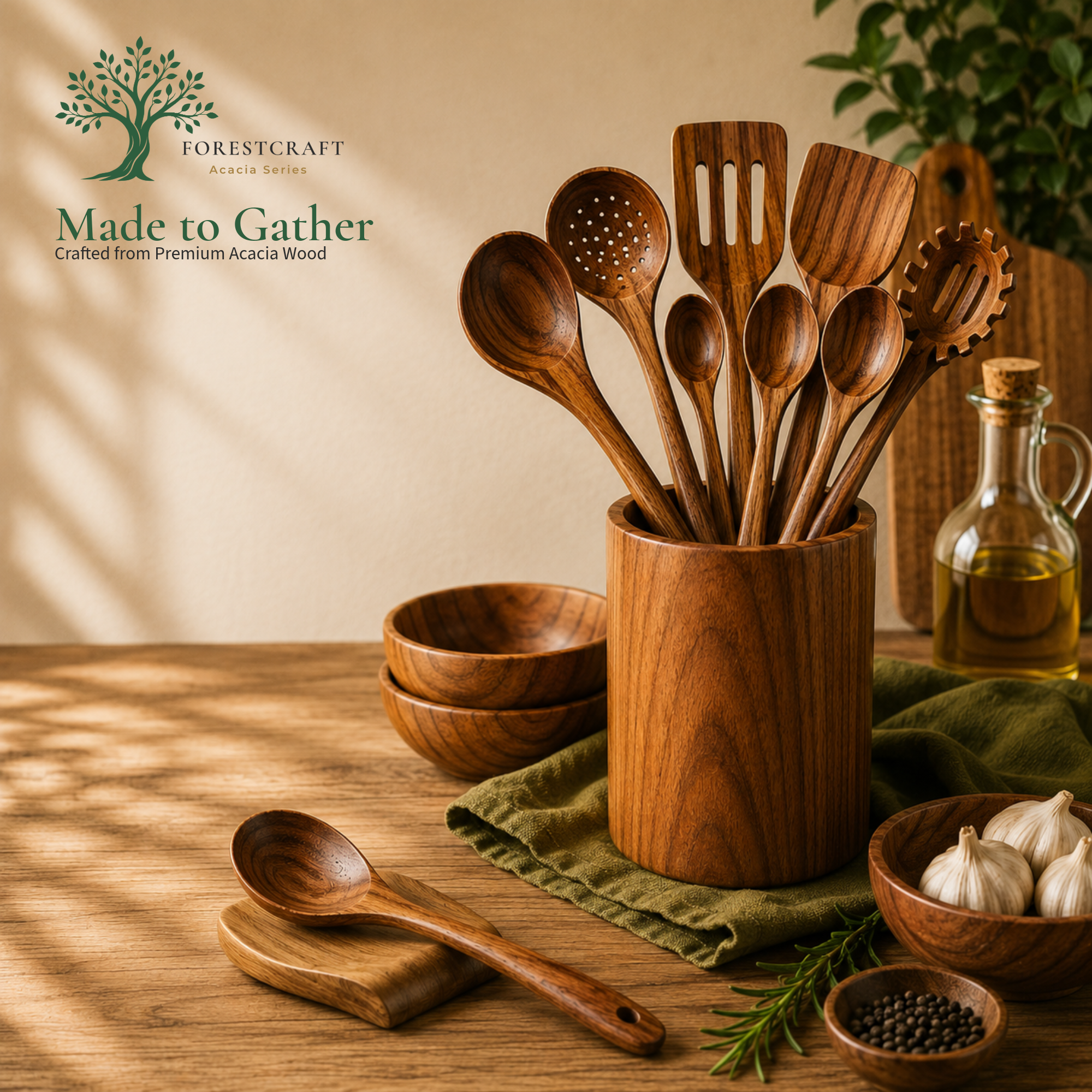
ForestCraft Kitchenware shapes its acacia pieces with smooth edges for exactly this reason. You can see the range in the Acacia Small Leaf Utensil Sets, where each set carries its own grain pattern.
How to Clean Acacia Cooking Utensils After Every Use
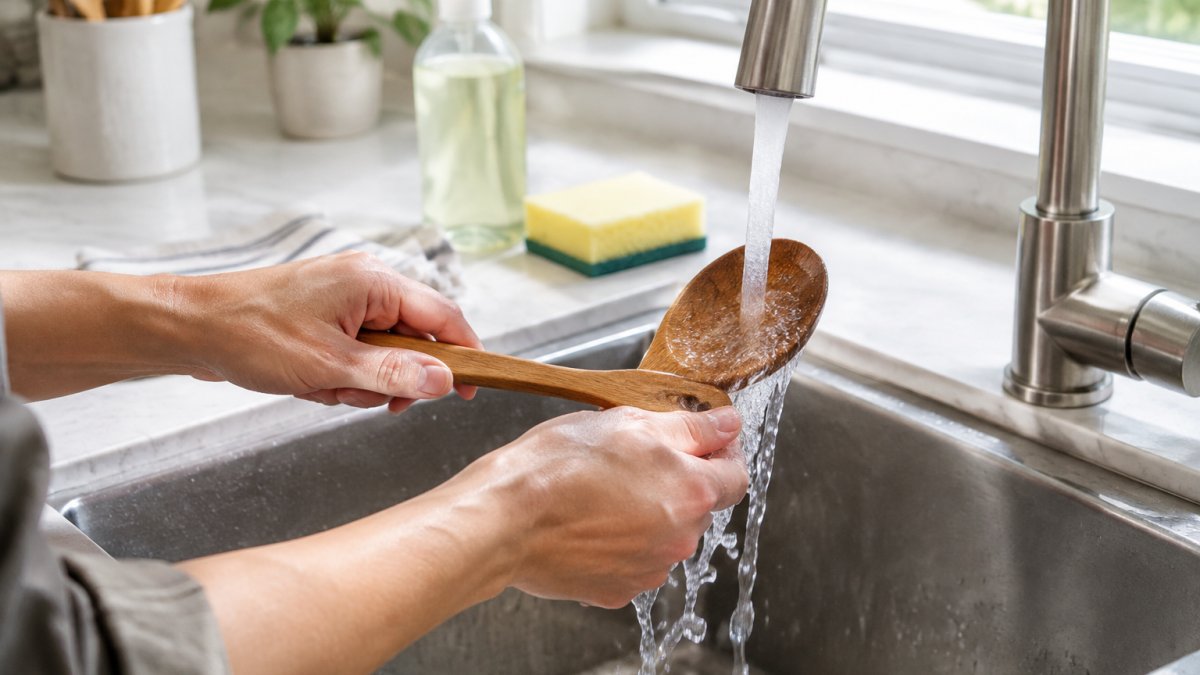
Cleaning acacia cooking utensils takes about a minute. Rinse, wash with mild soap, rinse again, and dry right away. That routine prevents most problems before they start.
Here is the everyday method:
- Rinse the utensil under warm water to loosen food.
- Add a drop of mild dish soap to a soft sponge.
- Wipe along the grain, not across it.
- Rinse off all soap residue.
- Dry with a clean towel.
- Stand the piece upright so air reaches every side.
Skip the soak. A quick wash is all acacia needs.
Choosing Soap and Cleaning Tools
Use mild dish soap and skip anything labeled heavy-duty or degreasing. Strong detergents strip the natural oils that keep wood supple.
For tools, a soft sponge or dishcloth works best. Avoid the scrubby side of a sponge on bare wood.
- Mild, unscented dish soap
- Soft sponge or cotton dishcloth
- Warm water, never scalding
One common mistake is leaving a wet utensil in the sink overnight. Standing water works into the grain and can lead to warping or splitting.
How to Clean Wooden Spoons With Boiling Water (Safely)
Boiling water can sanitize a wooden spoon, but it needs care. Never drop acacia into a pot of rolling boil.
A safer approach uses short contact:
- Bring water to a boil, then take the pot off the heat.
- Hold the spoon with tongs and dip it for a few seconds.
- Lift it out and let it cool slightly.
- Wipe dry with a clean towel.
This method helps with odors and surface bacteria, but reserve it for occasional use. Frequent boiling strips oils and dries the wood.
Watch out: leaving a spoon in hot water to "soak clean" is the fastest way to a cracked handle.
How to Deep Clean Wooden Spoons and Remove Stains
Everyday washing keeps acacia clean, but its tight grain also holds onto color and aroma. A deep clean every month or two, or whenever a piece looks dull or smells faintly of food, can help refresh the surface without driving water into the wood.
Acacia is dense, so stains tend to sit near the surface rather than sink deep, and most discoloration responds to a mild abrasive and a little patience.
Stain Removal by Type
Match the method to the mark:
- Tomato and berry stains. These leave a reddish or purple tint. Make a paste of baking soda and a few drops of water, rub it gently along the grain with your fingers or a soft cloth, let it sit for five to ten minutes, then rinse and dry immediately. Repeat once if the tint remains; avoid scrubbing hard, which raises the grain.
- Greasy residue. A film that feels tacky usually means polymerized cooking oil. A light scrub with coarse salt and a halved lemon lifts it; the salt provides gentle abrasion and the lemon's acid helps cut the film. Rinse thoroughly so no salt or acid stays behind.
- Dark water marks or rings. These come from moisture trapped in the finish. A very light sanding with fine-grit paper (220 or higher), followed by re-oiling, usually removes them. Sand only the affected area and always with the grain.
Odor Removal
For lingering smells, baking soda is the most reliable household option.
White vinegar works for some odors but should be used sparingly and always diluted; full-strength vinegar left on acacia can dull the finish.
Watch out: combining baking soda and vinegar on the wood creates a fizzing reaction that looks effective but does little for the grain and can leave residue in the pores.
What to Avoid
- Chlorine bleach and ammonia cleaners. These are harsh on wood fibers and can discolor acacia.
- Abrasive scouring pads. They raise the grain and create a rough surface that traps food.
- Submerging the whole piece. Clean in sections and rinse quickly.
After any deep clean, the wood will look pale and feel dry, that is the signal to oil it. A piece that has been deep cleaned and re-oiled looks and behaves like new. If a stain or odor persists after repeated deep cleaning, it may be worth considering whether the piece is nearing the end of its useful life.
How to Oil Wooden Spoons and Keep Acacia Conditioned
Oiling is the single most important habit for acacia cooking utensils. A thin coat of food-safe oil keeps the grain sealed, reduces water uptake, and prevents cracking.
Follow these steps:
- Wash and dry the utensil completely.
- Pour a small amount of food-safe mineral oil onto a cloth.
- Rub it into the wood along the grain.
- Let it sit for a few hours or overnight.
- Wipe off any oil the wood did not absorb.
- Buff with a clean cloth.
Warm the oil slightly first if it feels thick. A little goes a long way.
If you want a deeper look at which oils suit wooden tools, the guide to the best oils and conditioners for wooden kitchenware covers the options in detail.
How Often to Oil Wooden Utensils
Oil acacia utensils about once a month with regular use. Rarely used pieces can go longer, but check them before each season.
Watch for these signs that it is time to oil:
- The surface looks pale or dry
- Water no longer beads on the wood
- The grain feels slightly rough
A well-oiled spoon feels smooth and looks richer in color. That is the target.
Food-Grade Mineral Oil for Wooden Utensils: What to Buy
Food-grade mineral oil is a common choice for conditioning wooden utensils. It is a refined oil that is colorless and odorless, and it does not turn rancid the way many plant oils do.
Why Mineral Oil Works
Wood is porous. When acacia dries out, the grain opens slightly and takes on water more readily, which is when cracking and roughness begin. Mineral oil fills the surface pores and slows that water uptake. It does not seal the wood permanently, no oil does, so it needs refreshing, but it buys the wood time between washes and keeps the surface supple.
Reading the Label
Not every bottle sold as "mineral oil" is meant for the kitchen. Look for:
- "Food grade" or "food safe" on the label. This is the key distinction from industrial or laxative-grade mineral oil.
- Unscented and unflavored. Added fragrance has no place on a cooking utensil.
- No added vitamins or supplements. Those belong in a bottle, not on a spoon.
A common pattern is that hardware-store mineral oil is not food grade, so check before buying. A few ounces will condition a drawer of utensils for a year or more.
Wax-and-Oil Conditioners
Some products blend mineral oil with beeswax. The wax adds a bit more surface protection and a soft sheen, and it can help serving pieces that see less washing. For everyday cooking utensils washed after each use, plain mineral oil is usually sufficient and easier to reapply.
Oils to Avoid
- Olive, vegetable, canola, and nut oils. These are cooking oils that can go rancid over time.
- Coconut oil. It solidifies at cooler room temperatures and can leave a waxy film.
- Essential-oil blends marketed as "wood conditioners." Fragrance oils do not condition wood and can irritate.
How to Apply It
Wash and dry the utensil completely, then rub a thin coat of mineral oil into the wood along the grain with a clean cloth. Let it sit for a few hours or overnight, then wipe off the excess and buff with a clean cloth.
Keep a small bottle and a dedicated cloth in a kitchen drawer. Convenience drives consistency, and consistency is what keeps acacia smooth and rich in color.
Common Mistakes That Shorten the Life of Acacia Utensils
Most damage to acacia comes from a handful of avoidable habits. Fix these and the wood will last far longer.
- Dishwasher use. Heat and long wet cycles warp and crack wood. Hand wash only.
- Prolonged soaking. Standing water swells the grain.
- Drying upright in a wet rack. Trapped moisture invites warping.
A common mistake is stacking wet utensils in a drawer. Air cannot reach them, and moisture sits against the wood for hours.
If you want to build a kitchen stocked with pieces made to be used daily, the full ForestCraft collection shows the range of wooden kitchenware.
A Simple Maintenance Schedule for Acacia Utensils
A care routine works best when it is short and repeatable. This schedule covers the basics without turning into a project.
| Task | Frequency | Time Needed |
|---|---|---|
| Hand wash and dry | After every use | 1-2 minutes |
| Check for dryness or rough spots | Weekly | 1 minute |
| Oil and buff | Monthly | 10 minutes |
| Deep clean with baking soda | Every 2-3 months | 15 minutes |
| Full inspection for cracks | Every 6 months | 5 minutes |
Time Needed
Consistency matters more than any single step. For a broader routine that covers all your wooden tools, the guide to maintaining wooden kitchen utensils pairs well with this schedule.
Repair or Replace?
Minor issues are fixable. Light roughness responds to a gentle sanding with fine grit paper, followed by a fresh coat of oil.
Replace the piece when:
- A crack runs deep into the handle
- The wood splinters or sheds fibers
- A persistent odor will not lift after deep cleaning
Not sure how long a piece should last? The guide on how long wooden kitchenware should last gives a realistic picture.
Caring for acacia cooking utensils comes down to a few steady habits: wash by hand, dry right away, oil monthly, and store them dry.
Frequently Asked Questions
Do I need to oil acacia wood utensils?
Yes, if you want them to last. Acacia cooking utensils are dense, but repeated washing slowly pulls natural oils from the wood, leaving the grain dry and more prone to cracking. A light coat of food-grade mineral oil about once a month can help maintain that moisture barrier. Wipe on a thin layer, let it sit overnight, and buff off the excess with a clean cloth. Skip oils that can turn rancid, such as olive or vegetable oil.
Can acacia wood utensils go in the dishwasher?
No. Dishwasher heat and prolonged water exposure strip oils from the wood and can cause warping, splitting, and a rough surface. Hand wash acacia cooking utensils in warm water with mild dish soap, rinse, and dry immediately with a towel. Never leave them soaking in standing water or resting in a wet sink. This single habit does more for utensil life than any other care step.
How often should wooden cooking utensils be oiled?
Most acacia utensils benefit from oiling about once a month with food-grade mineral oil. If the wood looks pale, feels dry to the touch, or absorbs water quickly, it is ready for another coat. Utensils used daily may need it closer to every month; those used a few times a week can stretch to six weeks. A regular conditioning routine keeps the grain sealed and extends utensil life.
How do you deep clean wooden spoons and remove odors?
For stubborn stains or lingering odors, sprinkle coarse salt on the spoon and rub it with a lemon half, then rinse and dry thoroughly. A paste of baking soda and water works similarly on food residue. For a deeper refresh, pour boiling water over the utensil in a heat-safe bowl, let it sit for a minute, then wash and dry promptly. Re-oil afterward, since deep cleaning strips some of the wood's natural oils.
