Sustainable Kitchenware for Daily Use: A 2026 Guide

Table of Contents
- Why Sustainable Kitchenware Matters for Your Home
- Materials That Actually Last: Wood, Stainless Steel, and Ceramics
- How to Spot Quality Wooden Kitchenware
- Essential Sustainable Kitchen Swaps for Everyday Use
- How to Care for Wooden Cutting Boards and Spoons
- Building a Budget-Conscious Sustainable Kitchen
- Durability and Longevity: The Real Cost of Quality
- Conclusion
- Frequently Asked Questions
Last Updated: August 31, 2026
Why Sustainable Kitchenware Matters for Your Home
Building a kitchen around durable, thoughtfully chosen tools can change both how you cook and how often everyday items need to be replaced. Sustainable kitchenware for daily use focuses on materials and products designed for repeated use, practical care, and long-term value. Choosing a well-made wooden spoon, cutting board, mixing bowl, or stainless steel prep surface can reduce reliance on short-lived alternatives while making everyday cooking feel more intentional.

Durability is an important part of making more sustainable choices in the kitchen. Items that crack, warp, stain, or otherwise become unusable eventually need to be replaced, consuming additional materials and creating more waste. Hardwoods such as teak and acacia, along with materials such as stainless steel and glass, can offer durable options when they are selected for the right task and cared for properly. The Environmental Protection Agency recommends reducing and reusing as important ways to prevent waste before recycling or disposal becomes necessary. Choosing kitchen tools for longevity follows that same practical principle: buy thoughtfully, maintain what you own, and replace items only when needed.
This guide covers how to identify quality materials, which everyday kitchen swaps offer practical value, and how proper care can extend the useful life of wooden and stainless steel tools.
Materials That Actually Last: Wood, Stainless Steel, and Ceramics
Durable kitchenware can be found across several material families, including wood, stainless steel, and ceramics.
Hardwoods such as teak, acacia, and olive wood can be excellent choices for frequently used kitchen tools. Their density, attractive grain, and natural character make them well suited to utensils, bowls, serving pieces, and cutting boards when properly finished and cared for. Different wood species have different characteristics, so quality depends not only on the type of wood but also on construction, finish, intended use, and maintenance. Unlike many synthetic kitchen tools, wood can often be refreshed with proper cleaning, occasional conditioning with food-grade mineral oil or an appropriate wood-care product, and light sanding when appropriate. The tradeoff is that wooden kitchenware generally requires hand washing and should not be left soaking or exposed to prolonged heat and moisture.
Stainless steel offers a non-porous, low-maintenance surface for many kitchen tasks. It does not absorb moisture or food odors the way porous materials can, and properly made food-contact stainless steel is easy to wash and sanitize. The ForestCraft Kitchenware collection includes stainless steel prep boards designed for durable everyday food preparation and easy cleanup. Stainless steel does have an important tradeoff: because the surface is harder than wood, repeated cutting on it can dull knife edges more quickly. Some cooks therefore use stainless steel for tasks where easy cleanup is a priority while keeping a wood or other knife-friendly cutting surface for routine chopping.

Ceramic and ceramic-coated cookware can provide useful alternatives to some traditional nonstick cookware, but the terms deserve careful distinction. Solid ceramic cookware and cookware with a ceramic-based nonstick coating are not the same product, and formulations can vary by manufacturer. Consumers specifically trying to avoid PFAS should check the manufacturer's materials and product claims rather than assuming every product described as “ceramic” is automatically PFAS-free. The Agency for Toxic Substances and Disease Registry provides additional information about PFAS and potential health effects. Ceramic-coated surfaces can also wear or become damaged over time, so following the manufacturer's care instructions is important. Wooden utensils are often a practical companion for these surfaces because they are less likely to scratch cookware than harder metal tools.
How to Spot Quality Wooden Kitchenware
Not all wooden utensils and boards are built the same.
Grain and finish are good places to start. Quality wooden kitchenware should have a smooth, comfortable surface without obvious splinters, deep cracks, or rough unfinished areas. Natural variations in color and grain are normal and are part of what makes each wooden piece distinctive. Look for products that clearly identify the wood species and provide information about the finish and recommended care. Hardwoods such as teak, acacia, walnut, and olive wood are commonly used for kitchenware because they combine durability with attractive natural grain.
Construction should match the tool's intended use. A cutting board should feel stable on the work surface and substantial enough for the food-preparation tasks it is designed to handle. Wooden spoons, spatulas, and serving utensils should feel comfortable and balanced in the hand, without weak or unusually thin areas that could be prone to damage. Weight alone doesn't determine quality, but solid construction and thoughtful proportions are good indicators of a tool designed for regular use.
Pay attention to how the wood is finished. Kitchenware intended for food contact should use a finish appropriate for that purpose, and the manufacturer should provide clear care instructions. Depending on the product, wooden kitchenware may be sold unfinished, conditioned with food-grade mineral oil or wax, or treated with another food-contact-appropriate finish. Be cautious when a seller provides little information about the wood, coating, or recommended care, especially for products that will come into direct contact with food.
Edges and details can reveal the quality of construction. Examine handles, edges, corners, joints, and transitions between surfaces. They should feel smooth and comfortable, without splinters, sharp unfinished areas, or obvious defects. For utensils, consider how the handle feels in your hand and whether the shape suits the way you cook. These small details often matter more during daily use than decorative features alone.
If you're comparing wooden kitchen tools before buying, our guide to how to identify durable wooden kitchenware takes a closer look at wood selection, construction, finish, and the signs that help distinguish a well-made tool from one that may need replacing sooner.
Essential Sustainable Kitchen Swaps for Everyday Use
Practical kitchen swaps often begin by replacing worn-out or short-lived items with durable tools designed for repeated use. Rather than replacing everything at once, focus on the utensils, prep surfaces, and storage pieces you use most often.
Wooden Utensils and Serving Tools
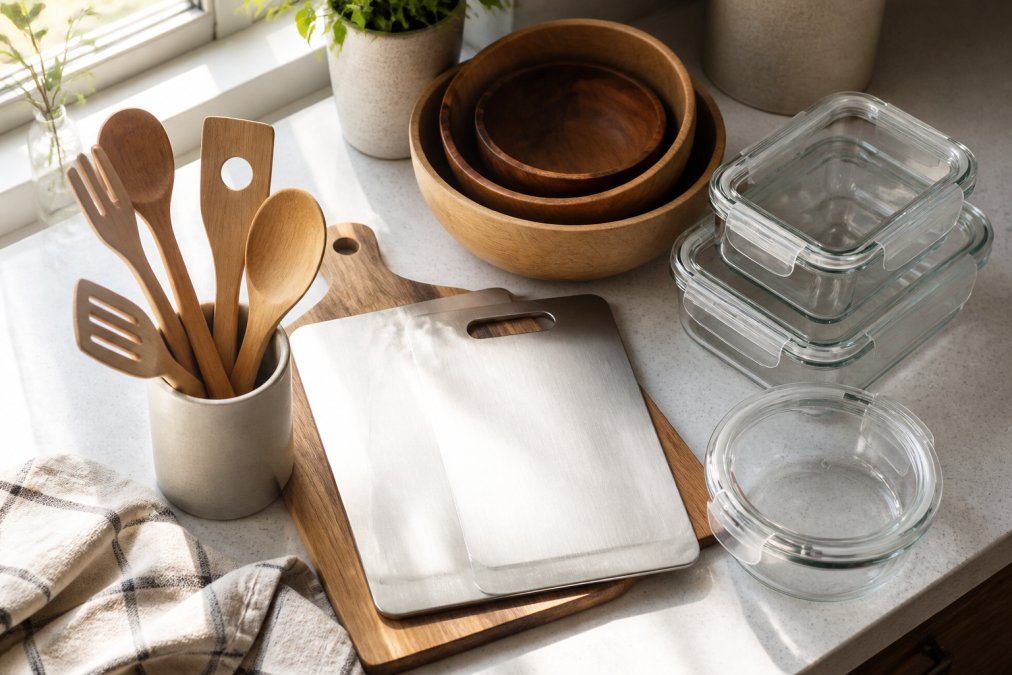
Wooden spoons, spatulas, and serving tools are practical alternatives when plastic utensils reach the end of their useful life. Well-made wooden utensils are comfortable to hold, won't scratch many cookware surfaces, and can provide years of service when properly cleaned and maintained. They also bring natural warmth and texture to everyday cooking without requiring a complete kitchen overhaul.
ForestCraft offers several examples of how wood can serve different kitchen needs. The ForestCraft Acacia Serving Spoon & Fork Set is designed for tossing salads and serving side dishes, while the ForestCraft Korean Tableware Set offers a compact wooden spoon-and-chopstick design suited to rice dishes, soups, noodles, and everyday meals. Because natural wood varies in color and grain, individual pieces can have their own distinctive appearance.
Stainless Steel Cutting Boards
Stainless steel prep surfaces appeal to cooks who prioritize easy cleanup and a non-porous work surface. Stainless steel does not absorb liquids or food odors, and its smooth surface can be thoroughly washed after food preparation. As with any food-contact surface, proper cleaning between tasks remains important, particularly when preparing raw meat, poultry, or seafood.
The ForestCraft Prep Boards come as a three-piece set, providing different sizes for different food-preparation tasks. Their slim design makes the boards easy to store, while the stainless steel surface provides a durable, low-maintenance option for everyday prep. Because stainless steel is harder than wood, however, repeated cutting on it can dull knife edges more quickly. Cooks who want the benefits of both materials may choose stainless steel for selected prep tasks while using a more knife-friendly surface for routine chopping.
Glass and Wood Storage Solutions
Glass containers and wooden bowls can complement reusable plastic storage rather than requiring an all-or-nothing replacement. Glass is particularly useful for foods that may stain or leave odors in some plastics, while wooden bowls work well for preparation, serving, and certain types of dry storage. Choosing the right material for the task is more useful—and often more sustainable—than discarding functional kitchenware simply to replace it with something new.
Glass food-storage containers are non-porous, easy to see through, and generally resistant to food odors and staining, although they are heavier and more breakable than plastic. Wooden bowls serve a different purpose and can move easily from food preparation to the table. The ForestCraft Acacia Mixing Bowls provide several sizes for mixing ingredients, preparing salads, and serving food, while the natural variation in acacia grain gives each bowl a distinctive appearance.

For salad preparation and serving, the ForestCraft Teak Salad Set pairs a wooden serving bowl with matching utensils, providing a coordinated alternative for preparing and presenting salads at the table.
How to Care for Wooden Cutting Boards and Spoons
Proper care can significantly extend the useful life of wooden kitchenware. For a more detailed cleaning and maintenance routine, see our guide to how to maintain wooden kitchen utensils.
Hand washing is generally the safest choice for wooden kitchenware. Unless the manufacturer specifically states otherwise, wash wooden boards, spoons, and utensils with warm water and mild dish soap rather than placing them in the dishwasher. Prolonged exposure to water, high heat, and dishwasher cycles can contribute to drying, warping, cracking, or damage to the finish. After washing, rinse the item and allow it to dry thoroughly before storing.
Condition wood when it begins to look or feel dry. For unfinished or oil-finished kitchenware, a food-grade mineral oil or wood-conditioning product can help maintain the surface and reduce excessive drying. Follow the product manufacturer's care instructions, since the appropriate treatment and frequency can vary by wood species, finish, and how often the item is used. Apply the conditioner to a clean, dry surface and allow it to absorb as directed before wiping away any excess.
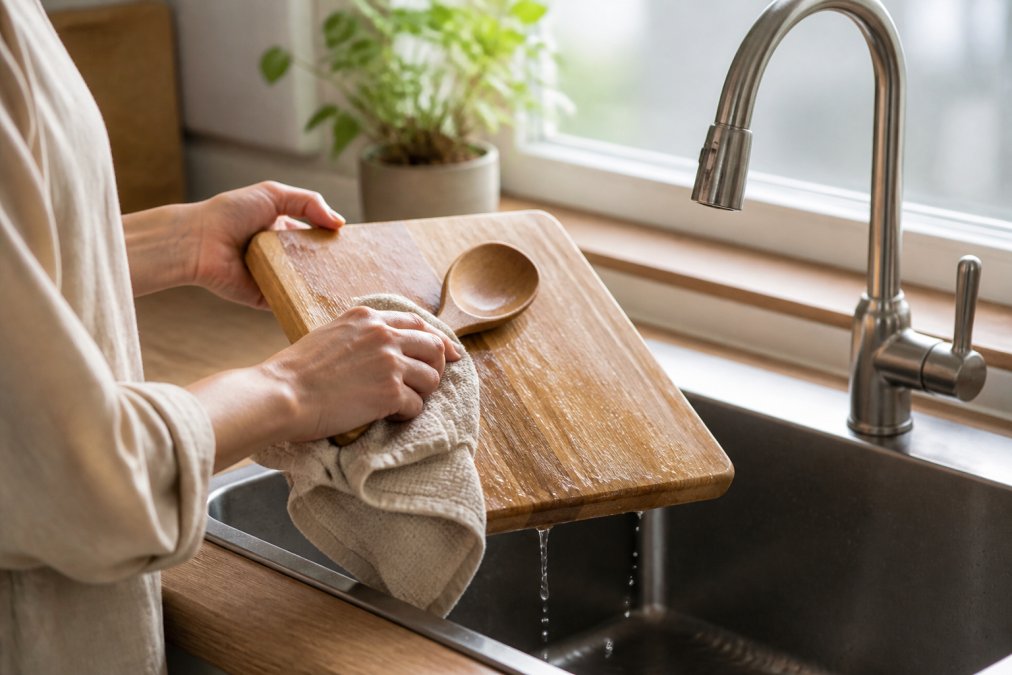
Let wood dry thoroughly before storing it. Avoid leaving wooden kitchenware soaking in water or storing it while damp. Cutting boards should be allowed to dry with adequate airflow, and utensils should be kept away from prolonged moisture and excessive heat. Proper drying is one of the simplest ways to help prevent warping, cracking, and unwanted odors.
Inspect wooden tools for damage as they age. Minor surface roughness may sometimes be corrected according to the manufacturer's care recommendations, but deep cracks, significant splitting, persistent odors, or areas that can no longer be cleaned effectively may indicate that an item should be repaired or replaced. Cutting surfaces deserve particular attention because deep damage can make thorough cleaning more difficult.
A simple routine of gentle washing, thorough drying, appropriate conditioning, and regular inspection can help wooden kitchenware remain attractive and useful for years. Just as importantly, maintaining the tools you already own can reduce unnecessary replacement—one of the simplest principles behind a more sustainable kitchen.
Building a Budget-Conscious Sustainable Kitchen
Building a more sustainable kitchen doesn't require replacing everything at once or spending hundreds of dollars on new tools. A budget-conscious approach starts with what you already own and prioritizes replacement only when an item is worn out, no longer performs well, or no longer meets your needs.
Start with the items you use most. When a frequently used cutting board, spoon, spatula, or other kitchen tool needs replacing, that's a good opportunity to consider a durable alternative. Spending a little more on a well-made item can make sense when its materials, construction, and care requirements are suited to frequent use.
Upgrade storage as needed. There's no sustainability benefit in discarding functional storage containers simply because they're plastic. Continue using safe, serviceable containers for appropriate tasks, and when replacement becomes necessary, consider durable options such as glass for food storage or reusable bowls and containers suited to your household's needs.
Expand gradually. Serving pieces, mixing bowls, and specialty tools can be added or replaced as your needs and budget allow. Focus on usefulness rather than accumulating more products. When something wears out, consider whether a durable wood, stainless steel, glass, ceramic, or other reusable alternative makes sense for the way you actually cook.
Priority |
Tool |
Material to Consider |
When to Replace |
Why Prioritize it |
|---|---|---|---|---|
1 |
Cutting board |
Wood or stainless steel |
When worn or damaged |
Frequently used for meal prep |
2 |
Cooking utensils |
Wood, stainless steel, or other durable material |
As existing tools wear out |
Used frequently and affects cookware |
3 |
Food storage |
Glass or other reusable containers |
As needed |
Useful for leftovers and meal prep |
4 |
Serving pieces |
Wood, ceramic, glass, or stainless steel |
As needed |
Can serve both practical and presentation needs |
5 |
Specialty tools |
Material suited to the task |
Only when needed |
Adds functionality without unnecessary purchases |
If you're deciding whether a higher-priced kitchen tool is worth the investment, our guide to why premium kitchen tools cost more explains how materials, construction, durability, and design can affect both price and long-term value.
Durability and Longevity: The Real Cost of Quality
Durable kitchenware often costs more upfront, but purchase price tells only part of the story. A better way to evaluate value is to consider how often an item will be used, how well it is constructed, whether it can be maintained or restored, and how soon it is likely to need replacement.
The useful life of any kitchen tool varies considerably based on its materials, construction, frequency of use, care, and the tasks it performs. Rather than relying on a fixed lifespan, look for signs that a product is still safe, functional, and appropriate for its intended use. Some wooden tools can be cleaned, conditioned, or lightly refinished as they age, while damaged items made from other materials may be more difficult to restore. Extending the useful life of products you already own can reduce both replacement costs and unnecessary waste.
Long-term value also depends on how often a tool earns its place in the kitchen. A comfortable wooden spoon used several times a week may provide more practical value than a specialty gadget that rarely leaves the drawer. The same principle applies to bowls, serving pieces, prep surfaces, and storage: durability matters, but usefulness matters too. Choosing tools that suit the way you actually cook can help prevent both premature replacement and unnecessary purchases.
The real value of sustainable kitchenware isn't found in any single material or price point. It comes from choosing useful products thoughtfully, caring for them properly, and keeping them in service as long as they remain safe and functional. A kitchen built gradually around durable, frequently used tools can be both practical and more sustainable without requiring constant upgrades.
Conclusion
Building a more sustainable kitchen doesn't require replacing everything you own. It starts with using what you have, caring for it well, and choosing durable replacements when they're actually needed. Materials such as wood, stainless steel, glass, and ceramic can all have a place in a thoughtful kitchen when they're selected for the right purpose. By focusing on quality, usefulness, and proper care, you can build a kitchen that creates less unnecessary waste while serving your household well for years to come.
Ready to explore durable kitchen tools? Browse the ForestCraft Kitchenware collection for wooden utensils, serving pieces, bowls, prep tools, and other products designed for everyday use.
Frequently Asked Questions
What materials are best for sustainable kitchenware that lasts?
Durable kitchenware can be made from several materials, including hardwoods such as teak and acacia, stainless steel, glass, cast iron, and ceramic. The best choice depends on how the item will be used and maintained. Wood works well for many utensils, bowls, serving pieces, and cutting surfaces, while stainless steel provides a non-porous, low-maintenance option for many prep tasks. Rather than choosing a material based on a “sustainable” label alone, consider durability, construction, care requirements, and whether the product fits the way you actually cook.
How do I know if wooden kitchen utensils are high quality?
Look for wooden utensils with smooth surfaces, comfortable handles, and no obvious splinters, deep cracks, or rough unfinished areas. The manufacturer should identify the wood species and provide information about the finish and recommended care. Well-made utensils should feel balanced and appropriately shaped for their intended use. Natural variations in grain and color are normal and don't indicate poor quality.
How often should I oil wooden cutting boards and spoons?
Conditioning frequency depends on the wood, finish, frequency of use, and manufacturer's care instructions. For unfinished or oil-finished wooden kitchenware, consider applying a food-grade mineral oil or appropriate wood-conditioning product when the surface begins to look or feel dry. Always start with a clean, thoroughly dry surface and follow the care instructions for your particular product. Avoid soaking wooden kitchenware, and allow it to dry completely after washing.
Are wooden utensils really better than plastic for the environment?
It depends on the product, how it was made, how long it remains in use, and what happens at the end of its useful life. A durable wooden utensil made from responsibly sourced material and cared for properly can be a practical alternative to frequently replaced plastic tools. However, replacing functional plastic utensils simply to buy wooden ones may create unnecessary waste. A more sustainable approach is often to use safe, functional tools for as long as practical and choose durable replacements when they are actually needed.
Can I put wooden kitchen tools in the dishwasher?
Hand washing is generally recommended for wooden utensils, cutting boards, and serving pieces unless the manufacturer specifically states otherwise. Prolonged exposure to water, high heat, and dishwasher detergents can contribute to drying, warping, cracking, or damage to some finishes. Wash wooden kitchenware with warm water and mild dish soap, then allow it to dry thoroughly before storing. For other materials, including stainless steel, follow the manufacturer's care instructions rather than assuming every product is dishwasher-safe.